Swim Lessons Near Me: How to Find the Right Classes for Kids and Adults
Swim lessons near me are easy to find through your local YMCA, city recreation department, community pool or a dedicated swim school, and most families start with a group class because it is the most affordable way to learn. Group lessons typically cost about $15 to $35 per session in a monthly enrolment, while private 30-minute lessons usually run $45 to $100, according to 2026 US pricing data. The American Academy of Pediatrics recommends that swim lessons can begin for many children from age 1, with formal lessons by age 4, because learning to swim is one of the most effective layers of protection against drowning. This guide explains where to look, what lessons cost, how to choose a programme, and what adults who never learned should know.

Where Can You Find Swim Lessons Near Me?
The best place to start looking is the pool you already know, because most communities offer lessons in more places than people realise. Your local YMCA is often the first port of call, with group and private lessons for every age, and city or county recreation departments run low-cost group programmes at public pools that can cost as little as $20 to $42 for a whole multi-week session. Dedicated children’s swim schools such as Aqua-Tots and SafeSplash run year-round weekly classes in warm indoor pools, while school pools, health clubs, community centres and some hotels also offer lessons. A map search for swim lessons in your area will show all of these, and it is worth checking the distance and the timetable before you commit, because a weekly lesson only works if you can actually get there.
Private instructors are another option, especially if your schedule is irregular or your child needs one-to-one attention, and many will teach at your home pool or a local community pool. You can find them through swim school websites, local parent groups and community noticeboards, and some list their services on tutoring and lessons marketplaces. When you contact any provider, ask whether they teach at a pool near you, what ages and levels they cover, and whether they offer a trial lesson before you pay for a full session. Visiting the pool first is always worthwhile, because a clean, warm and well-supervised pool with a friendly atmosphere tells you more about a programme than any website can.
When Should Children Start Swim Lessons?
The American Academy of Pediatrics (AAP) recommends swim lessons as a layer of protection against drowning that can begin for many children starting at age 1, and by their fourth birthday most children are ready for formal lessons. There is no evidence that infant swim programmes for babies under one year old lower drowning risk, so the AAP does not recommend them, but from age 1 onwards, water competency and survival skills training can help reduce drowning risk for children between the ages of 1 and 4. By age 4, children can usually learn basic water survival skills beyond back floating, such as treading water and getting to an exit point, and by age 5 or 6 most children in swim lessons can master the front crawl. If your child seems ready earlier, starting early is a good idea, and your paediatrician can help you decide based on your child’s emotional maturity, physical development and comfort in the water.
The reason timing matters so much is that drowning is the leading cause of death among children aged 1 to 4 in the United States, which makes swimming one of the few childhood skills that is genuinely life-saving rather than simply fun. Lessons are only one layer of protection, however, and the AAP is clear that they never replace adult supervision. Always keep a child within arm’s reach when they are in or near water, block access to pools during non-swim time, and remember that the Consumer Product Safety Commission found that 69 percent of children under the age of 5 who drowned were not expected to be in the water at the time. Starting lessons early, keeping supervision constant and securing the pool together form a safety net that no single measure can provide on its own.
How Much Do Swim Lessons Cost?
Prices vary widely because the market includes city recreation programmes, nonprofit YMCAs, dedicated swim schools and private instructors, so the figures below are guide ranges for the United States as of November 2026. Group lessons at private swim schools typically cost about $20 to $50 per session, and dedicated schools often bill monthly, with weekly group programmes running around $116 to $148 per month. Municipal group programmes are far cheaper, at roughly $20 to $42 for an entire multi-week session, and YMCA group classes often work out to $15 to $30 per class. Private one-to-one lessons commonly cost about $30 to $125 or more for 30 minutes at a YMCA, while dedicated swim schools charge roughly $45 to $100 for a 30-minute private, and weekly private programmes can reach $330 to $455 per month. Adult beginner lessons usually run $30 to $80 per session.
What you pay also depends on where you live and whether you are a member, so it is worth comparing two or three providers before you book. Big-city rates run higher than small-town ones, members often pay less than non-members, and some schools charge a one-off registration or annual service fee on top of tuition. Ask whether the price includes pool entry, whether missed lessons can be made up, and whether there is a discount for siblings or for booking a full session rather than paying per class. A programme that looks cheap per lesson but charges for every missed class can end up costing more than a slightly dearer one with flexible make-up lessons, so read the terms before you sign up.
Group, Private or Semi-Private: Which Swim Lesson Format Fits You?
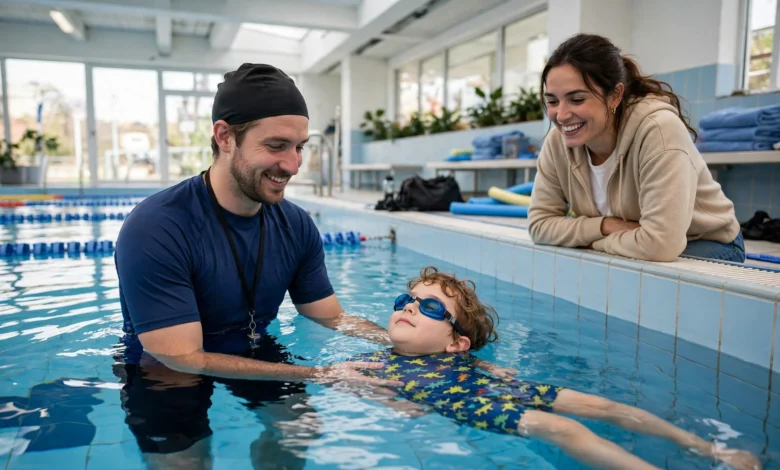
Group lessons are the most popular format for a reason, because they are affordable, social and effective for most beginners. A typical group has three or four swimmers per instructor, classes last 30 minutes for children, and the shared setting helps nervous children relax because they can watch others try first. Group lessons also build a routine, with the same time, the same teacher and the same classmates each week, which many children find reassuring. The trade-off is less individual attention, so a child who is very fearful, who has additional needs, or who needs to catch up quickly may progress more slowly in a group than they would with a teacher to themselves.
Private lessons give one swimmer the instructor’s full attention for the whole session, which is why they cost two to four times as much as a group class, and they are the best choice when progress needs to be fast or confidence is low. Semi-private lessons, with two or three swimmers, usually siblings or friends, sit in the middle at roughly $25 to $55 per swimmer per session, and they work well when the swimmers are at a similar level. Parent-and-child classes for babies and toddlers cost about $18 to $35 per session and focus on water comfort rather than strokes. The right format depends on your budget, your child’s temperament and your goals, and many families start with group lessons and switch to private ones for a short block when a child gets stuck on a particular skill.
What Makes a Good Swim Lesson Programme?
A good programme teaches water survival competency, not just strokes, and that distinction is the first thing to check. Look for classes that follow recognised guidelines and teach children to find the surface when underwater, swim to safety and exit the water on their own, rather than programmes that only drill arm movements. Instructors should hold a recognised qualification, such as the American Red Cross Water Safety Instructor certification, and the school should be happy to tell you its student-to-instructor ratios, its progression levels and how it assesses when a child is ready to move up. For children under 3, the AAP notes that lesson water should ideally be heated to between 87 and 94 degrees Fahrenheit, because cold water makes small children miserable and distracts them from learning.
Watch a class before you enrol, because what you see in ten minutes tells you more than any brochure. A good lesson has children active for most of the session rather than waiting on the side, the instructor gives clear and encouraging feedback, and the atmosphere is warm and patient rather than rushed or harsh. The pool area should be clean, the changing rooms should be safe and supervised, and there should be a clear policy on parents watching from the side, on make-up lessons and on what happens if your child is ill. If a school will not let you observe a lesson, or cannot explain how children progress from one level to the next, take that as a warning sign and look elsewhere.
Swim Lessons for Adults: Is It Ever Too Late to Learn?
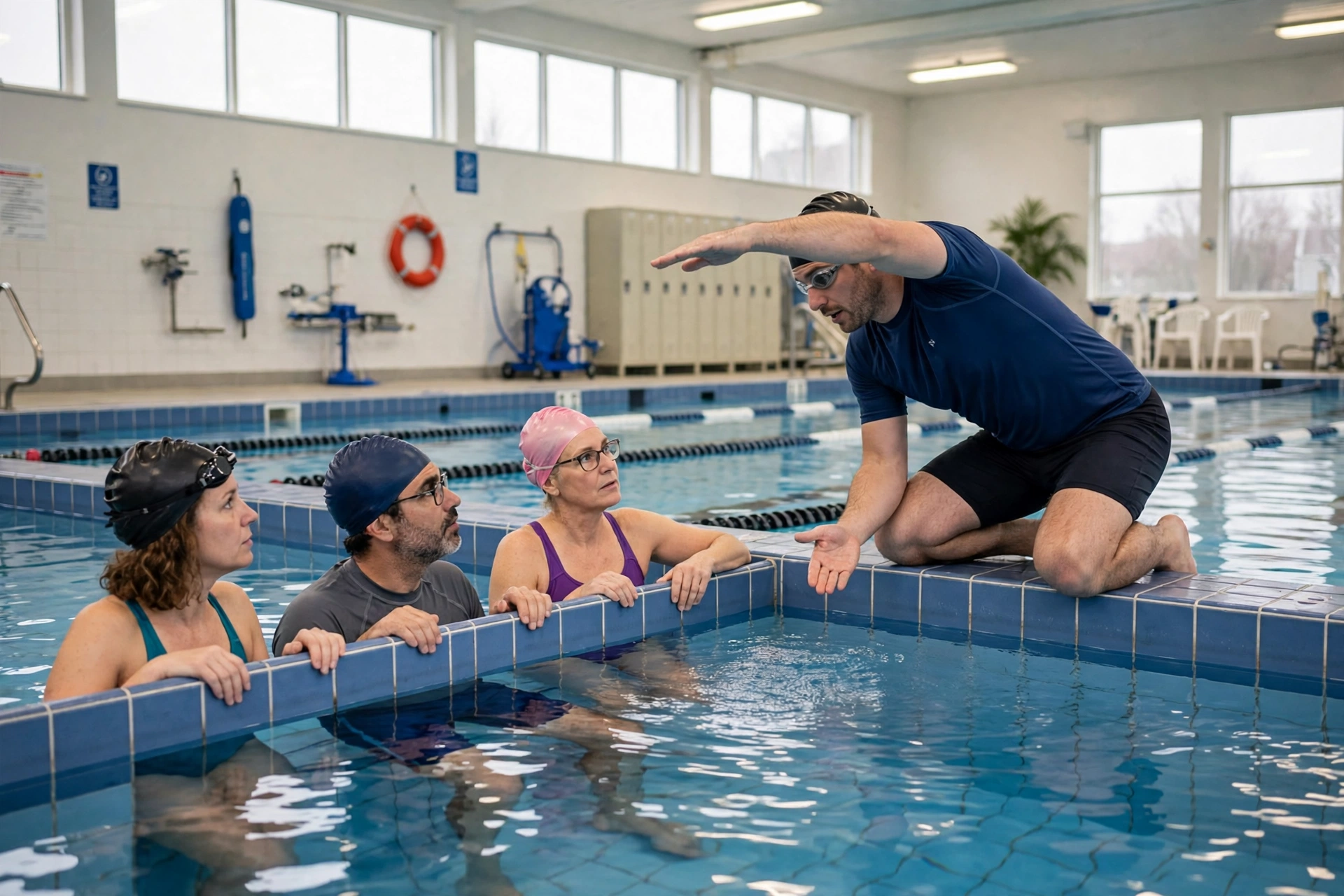
It is never too late to learn to swim, and adult beginner classes are one of the fastest-growing parts of the swim lesson market. Many adults who cannot swim grew up without access to lessons, developed a fear of water after a bad experience, or simply never got round to it, and a good adult programme is built around those realities rather than pretending they do not exist. Classes are usually small, the pace is gentle, and the first sessions focus on breathing, floating and feeling comfortable with the face in the water before any stroke is attempted. Adult lessons typically cost $30 to $80 per session, and many pools run women-only sessions, evening classes and intensive holiday courses for adults who want to learn quickly.
Fear of water is the most common barrier for adults, and the best instructors treat it as normal rather than embarrassing. If you are nervous, tell the instructor before the first lesson, ask whether you can watch a class first, and consider starting with one-to-one lessons until your confidence grows. Learning as an adult also brings practical benefits that go beyond the pool, because swimming is a low-impact exercise that suits bad knees and bad backs, and because knowing how to swim makes holidays, beach trips and time with children near water far safer and more enjoyable. The adults who learn fastest are usually the ones who practise between lessons, even if that only means floating and breathing exercises at a public swim session.
How to Prepare for Your First Swim Lesson
A little preparation makes the first lesson far smoother, especially for children who may be nervous about a new place and a new teacher. Bring a well-fitting swimsuit, a towel, a swim cap if the pool requires one, and goggles if your child likes them, although many instructors prefer beginners to learn without goggles at first so they get used to water on their face. Arrive ten minutes early so there is time to change without rushing, find the pool, meet the instructor and let your child watch the end of the previous class. Eat a light snack an hour or so beforehand rather than a heavy meal, and make sure your child has used the toilet, because nothing disrupts a lesson faster than a child who needs to leave the pool.
Talk about the lesson beforehand in a calm and positive way, and keep your expectations realistic for the first session. Most first lessons are about getting comfortable, learning to blow bubbles, practising floating with support and learning the pool rules, rather than swimming lengths, and that is exactly as it should be. Praise effort rather than results, stay where your child can see you if the pool allows parents to watch, and avoid comparing your child with others in the group, because children learn at very different speeds. If your child cries or refuses to get in, do not force it, because a gentle and patient start builds a swimmer while a frightening first experience can put a child off the water for months.
How to Keep Learning Safe Between Lessons
Lessons build skill, but safety between lessons is what keeps children alive, and the habits you build at home matter as much as the strokes taught in the pool. Never leave a child unsupervised near water, even for a moment, and remember that drowning is often silent, with no splashing or shouting to warn you. Fences with self-closing gates, locked pool covers and alarms on doors leading to the pool are all proven layers of protection, and they matter because most young children who drown were not expected to be in the water at all. When you are near open water, use a US Coast Guard-approved life jacket rather than inflatable armbands, which can slip off and give a false sense of security.
Practise little and often between formal lessons, because short and regular exposure builds confidence faster than occasional long sessions. A weekly family swim where your child practises floating, blowing bubbles and reaching for the side keeps the lesson fresh without turning practice into a chore. Learning CPR is one of the most valuable things a parent can do, and the AAP recommends that caregivers and adolescents learn it, because the first minutes after a water incident matter enormously. Keep lessons going at least until your child has mastered basic water competency skills, and book refresher sessions after a long break, because skills fade faster than most parents expect.
Conclusion
Finding swim lessons near me is straightforward once you know where to look, and the best choice is usually the programme that fits your budget, your timetable and your swimmer’s temperament rather than the most expensive one on the list. Municipal pools and YMCA branches offer excellent value, dedicated swim schools provide warm water and consistent weekly routines, and private lessons are there when a child or an adult needs focused help. Start children from age 1 if they are ready, aim for formal lessons by age 4, and keep going until basic water competency is secure, because swimming is one of the few skills a child learns that can genuinely save their life.
For adults, the message is simpler still: it is never too late, and the first lesson is the hardest one to book. Compare two or three local providers, watch a class before you enrol, ask about instructor qualifications and make-up lessons, and choose the pool you will actually visit every week. Whether you are booking for a toddler taking their first splash or for yourself after years of avoiding the deep end, the right lesson is the one that leaves you looking forward to the next one, and that habit is what turns a nervous beginner into a confident swimmer.
How much do swim lessons near me cost?
Swim lessons near me typically cost about $15 to $35 per group session in a monthly enrolment, or $20 to $50 per session at a private swim school, according to 2026 US pricing data. Municipal group programmes are the cheapest option at roughly $20 to $42 for a whole multi-week session. Private 30-minute lessons usually cost $45 to $100, and YMCA private lessons range from about $30 to $125 or more depending on branch and membership. Prices are guide ranges as of November 2026, and members, residents and siblings often pay less.
What age should my child start swim lessons?
The American Academy of Pediatrics recommends that swim lessons can begin for many children starting at age 1, and that most children are ready for formal lessons by their fourth birthday. There is no evidence that infant swim programmes for babies under one year old lower drowning risk, so the AAP does not recommend starting before age 1. By age 4, children can usually learn basic water survival skills such as treading water and reaching an exit point, and by age 5 or 6 most children in lessons can master the front crawl.
How long does it take to learn to swim?
How long it takes to learn to swim depends on age, frequency and starting confidence, but most children who attend weekly lessons can swim a short distance independently within several months, and basic water competency usually takes a year or more of regular lessons. Adults who attend weekly classes often learn to swim a length within a few months. Progress is faster with two lessons a week, with practice between lessons, and with private tuition, while long breaks between sessions slow progress noticeably. There is no fixed timeline, and steady attendance matters more than speed.
Are private swim lessons worth the extra cost?
Private swim lessons are worth the extra cost when a swimmer needs fast progress, has a fear of water, has additional needs, or has got stuck on a particular skill in a group class. A private 30-minute lesson typically costs $45 to $100, compared with $15 to $35 for a group session, but the swimmer gets the instructor’s full attention for the whole lesson. For most beginners, group lessons are the better value, and many families use a short block of private lessons to overcome a specific hurdle before returning to a group.
Do adults really need swim lessons?
Yes, adults who cannot swim should take swim lessons, because drowning risk does not disappear with age and knowing how to swim makes time near water far safer. Adult beginner lessons typically cost $30 to $80 per session, and classes are small, patient and designed for people who may be nervous around water. Learning as an adult also opens up low-impact exercise and makes holidays, beach trips and time with children near water more enjoyable. It is never too late to learn, and the first lesson is usually the hardest one to book.