Dentist Office Near Me: How to Find a Good Local Dentist
A dentist office near me is one of the most useful local searches you will ever make, because regular dental care protects your teeth, your gums and your general health, and the right practice makes the whole experience easy. A good local dentist will explain what they find in plain language, agree the cost before starting work, treat you gently, and remind you when your next check-up is due. A poor one can leave you with surprise bills, rushed appointments and a reluctance to ever go back. This guide explains how to find a dentist office near you, what to look for in a good practice, what a visit costs, what happens at your first appointment, and how to get help quickly when a toothache cannot wait.


What Does a Dentist Office Do?
A dentist office, also called a dental practice, is where dentists and their team provide the full range of dental care for you and your family. The most common work is preventive: routine check-ups, professional cleaning, fluoride treatment, X-rays and advice on brushing and flossing, all designed to catch problems early while they are small and cheap to fix. The same practice also handles restorative work such as fillings, crowns, bridges, dentures, root canal treatment and extractions, and many offer cosmetic treatments such as whitening, veneers and clear aligners. Larger practices may have hygienists, orthodontists and oral surgeons working alongside the general dentists, so that most treatment happens in one place. The practice also keeps your dental records, reminds you about check-ups, and refers you to a specialist or a hospital when a problem needs expert care. Finding a good dentist office near you is therefore not just about fixing a toothache; it is about having a team that looks after your oral health for years.
How Do You Find a Dentist Office Near Me?
Finding a dentist office near me is easy, but finding one that is taking new patients and suits your needs takes a little more effort. Start with a map search for dentist offices in your area and note which ones are close to your home or workplace, because a practice you can reach easily is one you will actually visit. Check each practice’s website for the services it offers, whether it accepts new patients, and whether it takes your dental insurance or offers NHS care, and read recent patient reviews for honest comments about waiting times, friendliness and billing. Ask friends, family and neighbours for recommendations, since a personal referral is often more reliable than any advert. Professional directories are useful too: the American Dental Association’s Find-a-Dentist tool lists member dentists in the United States, and the NHS website lists NHS dentists in the United Kingdom. Phone your shortlist and ask whether they are accepting new patients, how soon you can get an appointment, and what a first check-up costs, because the answers will narrow the list quickly.
What Should You Look for in a Good Dentist Office?
A good dentist office shows its quality in ways you can check before you ever sit in the chair. Look for a practice that is clean, modern and well organised, with friendly reception staff who answer the phone and explain things clearly. Check that the dentists are properly qualified and registered with the relevant authority, and that the practice is transparent about prices, giving you a written estimate before any treatment begins. A good practice will ask about your medical history, listen to your concerns, and explain your options in plain language, including what will happen if you choose to do nothing. It should offer appointment times that fit your life, including early mornings or evenings if you work during the day, and it should have a clear policy for emergencies. Families should also check that the practice welcomes children and treats nervous patients gently, and that the building is accessible if anyone in the family uses a wheelchair or has limited mobility. Patient reviews are a strong signal: look for repeated praise about gentle treatment, honest advice and fair billing, and be cautious of practices with many complaints about surprise charges or rushed appointments. The best dentist office is one you feel comfortable returning to, so trust your instincts on the first visit.
How Much Does a Dentist Visit Cost?
The cost of visiting a dentist office depends on where you live, whether the practice is private or part of a public system, and what treatment you need. In the United States, a routine check-up with cleaning typically costs between $100 and $300 without insurance, a filling between $150 and $400, and a crown between $800 and $3,000, although dental insurance usually covers much of the preventive care. In the United Kingdom, NHS dental charges are set in bands: as of 2026, Band 1, which covers an examination, diagnosis and advice, is around £27, Band 2, which adds fillings, root canal treatment and extractions, is around £75, and Band 3, which includes crowns, dentures and bridges, is around £330, while private treatment costs considerably more. Always ask for a written estimate before treatment starts, and ask whether the practice offers a payment plan for expensive work. Dental insurance usually covers check-ups and cleaning in full and pays a share of fillings, crowns and root canals, while many private practices also offer membership plans that spread the cost of routine care across monthly payments. If cost is a barrier, dental schools, community clinics and charitable programmes often provide low-cost care, and some practices offer membership plans that spread the cost of routine check-ups across the year.
What Happens at Your First Visit to a New Dentist Office?
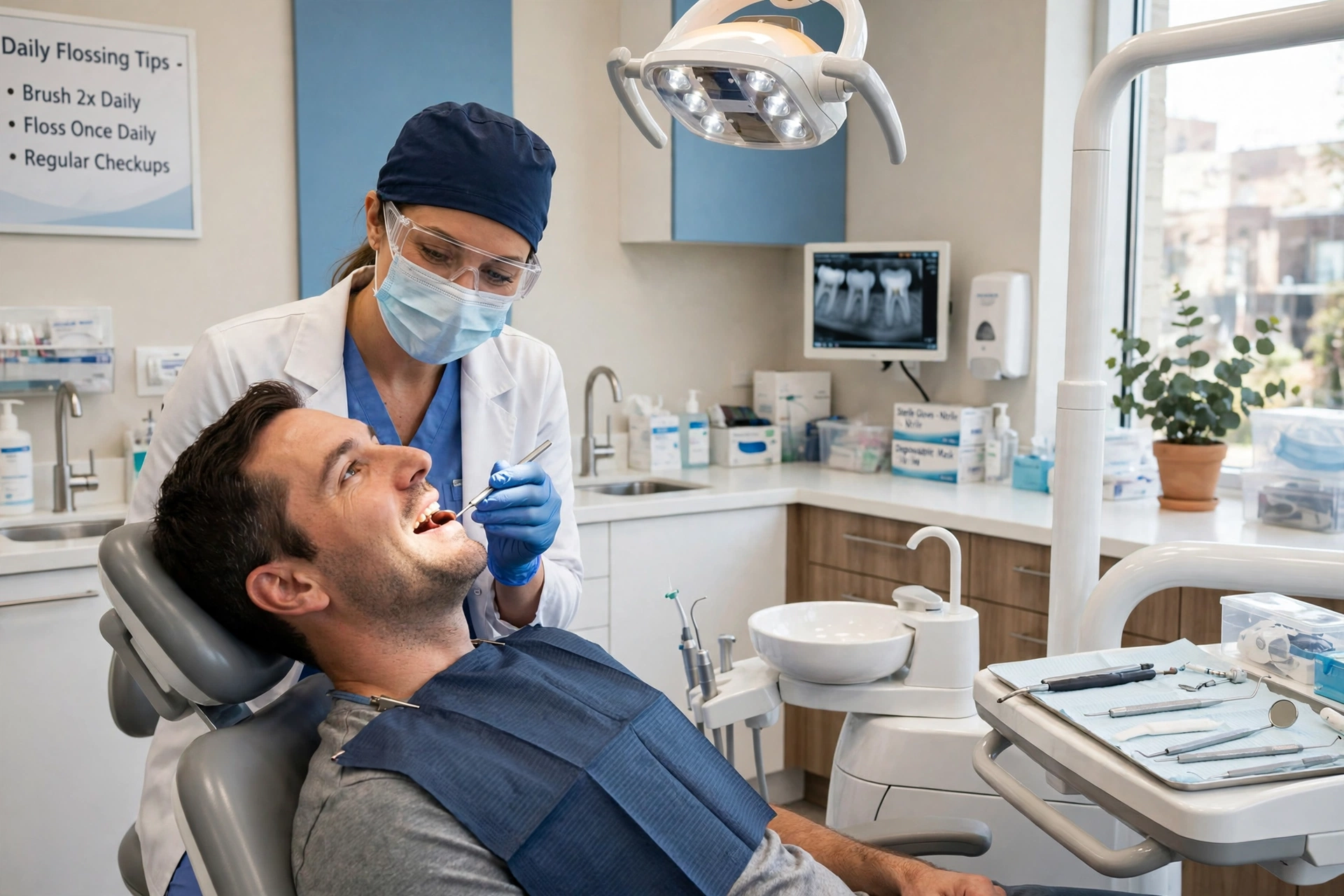
Your first visit to a new dentist office is mostly about getting to know you and your teeth, and it is usually straightforward and painless. You will fill in a medical history form, including any medicines you take, allergies and health conditions, because these can affect dental treatment. The dentist will examine your teeth and gums, check for signs of decay, gum disease and oral cancer, and may take X-rays to see what is happening below the surface. A hygienist may then clean your teeth, removing plaque and tartar and polishing the surfaces, and the dentist will explain anything they found, what treatment is needed, what it will cost, and what happens if you leave it. You will have the chance to ask questions, and a good dentist will answer them without rushing you. The whole appointment usually takes 30 to 60 minutes, and you will leave with a plan for your next check-up, usually in six to twelve months. If you feel nervous, tell the practice in advance, because they deal with anxious patients every day and can slow down, explain each step, and offer breaks. Bring a list of your current medicines and any recent dental work so the dentist has the full picture from the start.
How Do You Know When to Change Dentist?
Most people stay with the same dentist for years, but there are clear signs that it is time to find a new dentist office near you. If you consistently wait weeks for an appointment, if the practice never explains costs in advance, or if you feel rushed, unheard or pressured into expensive treatment you did not ask for, those are good reasons to look elsewhere. A practice that loses your records, cancels appointments repeatedly, or fails to follow up after treatment is also a warning sign. Moving house, changing insurance, or needing a specialist service your current practice does not offer are practical reasons to switch too. Changing dentist is simple: your new practice will request your records from the old one, and you do not need anyone’s permission to move. The transfer usually takes a few weeks, so book your first check-up at the new practice before your old records arrive, and bring a list of your medicines and any recent treatment so the new dentist is not working blind. Before you switch, visit the new practice for a check-up and see how it feels, because the relationship with your dentist matters as much as their qualifications.
What If You Need an Emergency Dentist Near Me?
Dental emergencies cannot wait for a routine appointment, and knowing what to do in advance saves pain and damage. A knocked-out tooth, severe pain, heavy bleeding, a broken tooth with a sharp edge, or swelling in the face or jaw all count as emergencies and need same-day care. Phone your own dentist office first, because most practices keep emergency slots each day, and explain the problem clearly so they can prioritise you. If your practice cannot see you, search for an emergency dentist in your area or call your local dental helpline, and in the United Kingdom the NHS 111 service can direct you to urgent dental care. If a tooth is knocked out, hold it by the crown, not the root, keep it moist in milk or inside your cheek, and get to a dentist within an hour, because the sooner it is replanted the better the chance it survives. Never ignore a dental abscess or facial swelling, because an infection can spread and become serious, so seek help the same day even if the pain eases.
Conclusion
A dentist office near me is easy to find, but the right one is worth choosing carefully. Use a map search and a professional directory, read honest patient reviews, check whether the practice is taking new patients and accepts your insurance or NHS status, and phone ahead to ask about prices and waiting times. Look for a clean, friendly practice that explains costs in advance, listens to your concerns and treats you gently, and do not hesitate to change if your current dentist no longer meets those standards. Regular check-ups, honest pricing and a dentist you trust are the foundations of healthy teeth for life, and they start with finding the right practice close to home. Book a check-up today, even if nothing hurts, because prevention is always cheaper and easier than treatment later, and a healthy smile is worth protecting.
How often should I visit the dentist?
Most adults should visit the dentist every six to twelve months for a check-up and cleaning, and your dentist will recommend the interval that suits your oral health. People with gum disease, a history of decay, or medical conditions such as diabetes may need to go more often, while people with very healthy teeth may be fine with an annual visit. Children should start seeing a dentist when their first tooth appears or by their first birthday, and then at the intervals their dentist suggests.
Do I need dental insurance?
Dental insurance is not essential, but it can make routine care much cheaper, because most plans cover check-ups, cleaning and X-rays either fully or with a small co-payment. Without insurance, you pay the full price of each visit, which is manageable for routine care but can be expensive for crowns, root canals or implants. If you do not have insurance, ask practices about membership plans, payment plans, or low-cost options at dental schools and community clinics, and compare the cost of a plan against what you would pay out of pocket.
What should I do if I am nervous about the dentist?
Dental anxiety is very common, and a good dentist office deals with it every day. Tell the practice when you book that you feel nervous, and ask for a longer first appointment so nothing is rushed. During treatment, agree a signal such as raising your hand if you need a break, and ask the dentist to explain each step before it happens. Many practices offer sedation for anxious patients, and techniques such as listening to music or bringing a friend for support can help. If anxiety has kept you away for years, a first check-up with no treatment is a gentle way to start again.
Can I visit a dentist without an appointment?
Most dentist offices work by appointment, but many keep emergency slots each day for urgent problems such as severe pain, a broken tooth or swelling. If you walk in without an appointment, the practice may be able to fit you in, but you may wait a long time and there is no guarantee. For routine care, always book ahead, and for an emergency, phone first so the practice can prepare and tell you when to come in, because that call also lets them judge how urgent your problem is.