Auto Body Near Me: How to Choose a Good Collision Repair Shop
An auto body near me search usually happens after a stressful moment, a parking scrape, a fender bender, or a bigger collision, and the shop you choose decides how well your car is repaired and how much the job costs. A good auto body shop restores your car to factory safety standards, matches the paint properly, and backs its work with a written warranty. A bad one can leave you with misaligned panels, peeling paint, and hidden damage that appears months later. This guide explains what auto body shops do, how to compare estimates, which certifications matter, and how to find a trustworthy shop near you.

The reason choosing carefully matters is that collision repair is not like an oil change, where the work is standard and easy to check. Modern cars use high-strength steel, aluminium panels, and advanced driver assistance systems that need recalibration after a repair, and a shop without the right training and equipment cannot do the job properly. Insurance companies may suggest a shop from their network, but in most US states you have the legal right to choose your own repairer. Knowing what to look for turns a stressful situation into a confident decision.
What Does an Auto Body Shop Do?
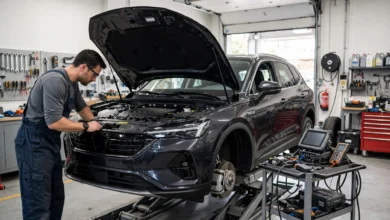
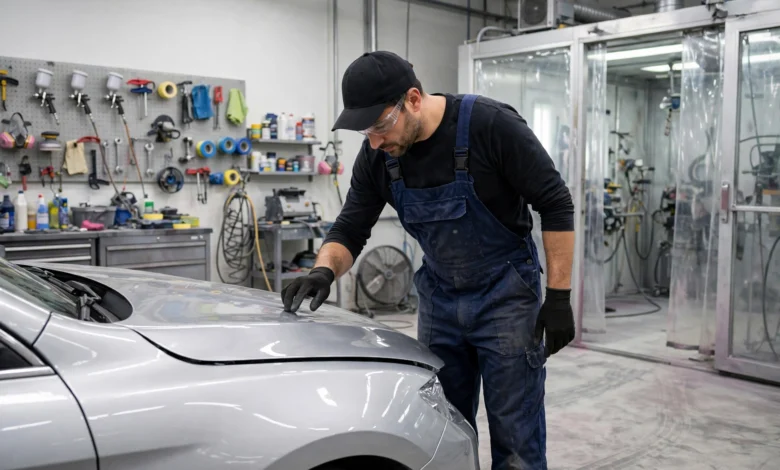
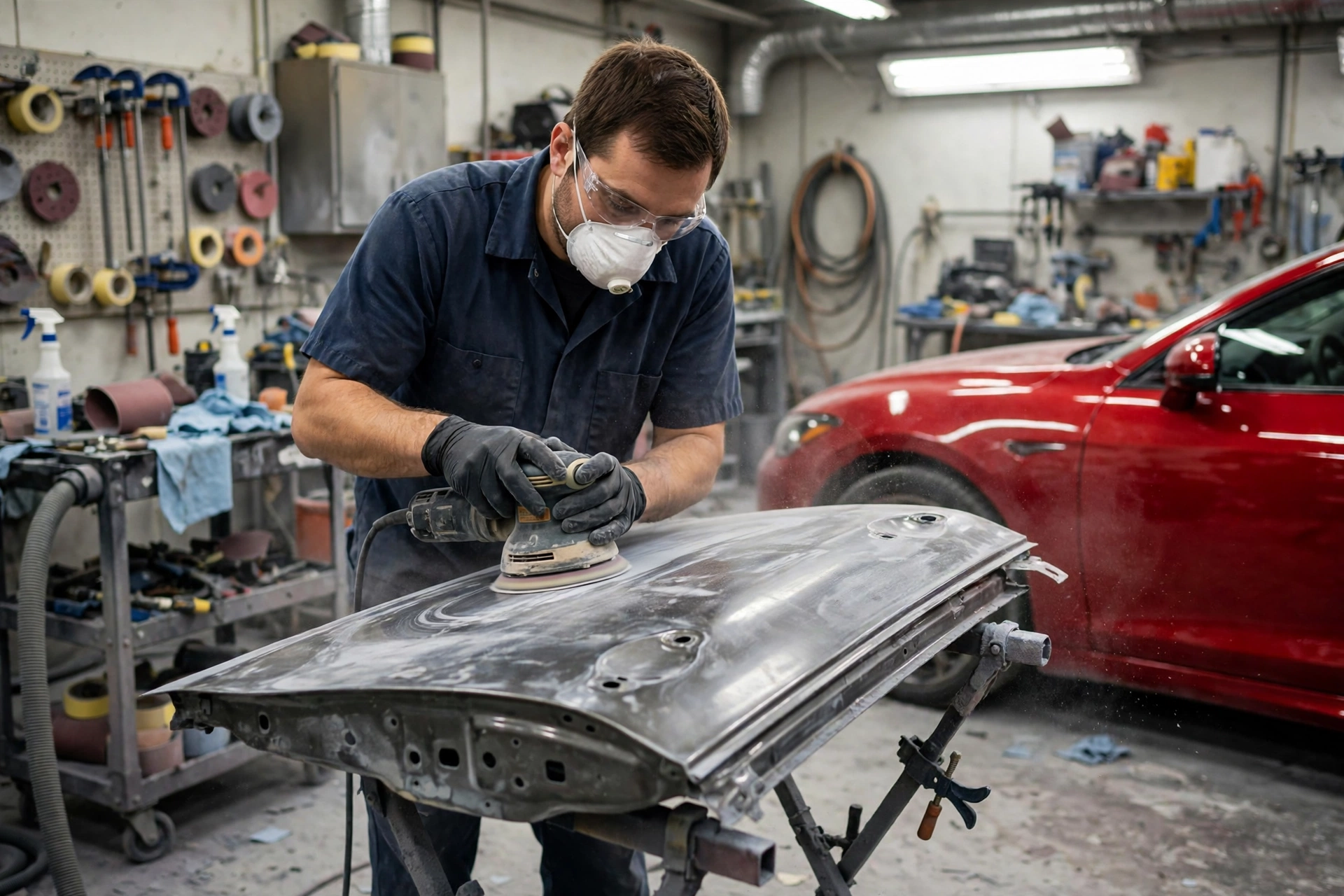
An auto body shop repairs the exterior and structure of a vehicle after a collision or other damage, and the work goes far beyond making a car look good again. Technicians straighten frames and panels, replace damaged parts, repair dents and scratches, repaint panels to match the factory colour, and recalibrate safety systems such as cameras, radar, and sensors. They also handle glass replacement, bumper repair, and rust repair, and they work with insurance companies to document damage and agree on the repair scope. A full repair restores both the appearance and the crash safety of the vehicle.
The process usually starts with an estimate, where the shop inspects the visible damage and writes a detailed quote listing parts, labour hours, and paint materials. Once work begins, the car is disassembled so hidden damage can be found, and the estimate is updated if more damage appears, a common step called a supplement. The body is then repaired or the panels replaced, the car is painted in a spray booth, reassembled, and quality-checked before it is returned. A professional shop keeps you updated through each stage and explains any changes to the estimate before doing extra work.
How Do You Choose an Auto Body Shop Near Me?
Choosing an auto body near me shop starts with certifications, because they are the fastest way to judge a shop competence. Look for I-CAR Gold Class, the highest training recognition in collision repair, held by fewer than 20 percent of shops, and ASE Blue Seal recognition or technicians certified by the National Institute for Automotive Service Excellence. Manufacturer certification matters too, because a shop certified by your car maker, such as Tesla, BMW, or Ford, has proven it has the equipment and training those repairs need. Shops holding I-CAR Gold Class status must retrain their staff annually, which is a meaningful signal of ongoing investment.
Read reviews on several platforms rather than relying on one source, checking Google Reviews, Yelp, and the Better Business Bureau for patterns in feedback about communication, timeliness, and finish quality. Visit the shop in person before committing, because a professional shop is organised, clean, and equipped with modern tools, including a computerised frame measuring system, a dedicated spray booth, and diagnostic equipment. Ask how long the shop has served the local community, because a shop that has repaired local cars for decades has survived on word of mouth, which is hard to fake.
How Do You Compare Auto Body Estimates?
Always get at least three written estimates before committing to any auto body shop, and compare them line by line rather than on the total alone. A detailed written estimate should list every part, the labour hours for each operation, and the paint materials, so you can see exactly what you are paying for. Compare the same scope of work across shops, because one estimate may be cheaper only because it leaves out a repair, uses cheaper aftermarket parts, or omits recalibration of safety systems. Beware of unusually low bids, which often indicate cheap parts or hidden charges that appear later.
Ask each shop the same questions so the comparison is fair. Ask whether the estimate uses original equipment manufacturer parts, aftermarket parts, or used parts, and whether you get a say in the choice. Ask how the shop handles hidden damage found during disassembly, what the warranty covers and for how long, and how long the repair will take. A reputable shop provides a written lifetime warranty on paint and bodywork for as long as you own the car, and it explains any change to the estimate before doing extra work. The goal is value and safety, not just the lowest price.
OEM vs Aftermarket Parts: What Should You Ask?
The parts a shop uses are one of the most important choices in a collision repair, and you should ask about them directly. Original equipment manufacturer parts are made by your vehicle brand, fit exactly as the factory intended, and maintain the car safety ratings and resale value, which is why they are the best choice for safety-critical parts such as airbag brackets, crumple zones, and bumper reinforcements. Aftermarket parts are cheaper alternatives made by other companies, and while some are good quality, others may not meet the same tolerances or fit as well. Used or salvage parts are the cheapest option and can be fine for non-safety items such as trim or mirrors.
Your insurance policy may specify which parts it will pay for, so read it before you authorise work, and ask the shop to explain any difference in price and quality between the options. For a leased or nearly new car, insist on OEM parts where safety is involved, because using the wrong part can affect warranty coverage and resale value. A trustworthy shop explains the trade-offs honestly, lets you choose where the policy allows, and documents the parts used on the final invoice so you have a record.
What Are Your Rights With Insurance and Repairs?
One fact many drivers do not know is that you are not required to use the body shop your insurance company recommends. In most US states you have the legal right to choose your own repair shop, and insurers can suggest a shop from their direct-repair network, but the final choice is yours. Choosing based on quality rather than an insurer cost arrangement protects your vehicle, and a good shop will work directly with your insurer on the claim even if it is not in the network. Check your state rules, because the exact wording of the right to choose varies, but the principle is widely protected.
After an accident, report the claim promptly, take photos of the damage from several angles, and keep copies of every document, estimate, and invoice. Ask the shop whether it offers rental car assistance, insurance coordination, and regular updates on repair progress, because those services make a difficult week much easier. If the insurer and the shop disagree on the repair scope, ask the shop to explain the difference in writing, and do not authorise work you do not understand. A professional shop advocates for a proper repair, and a good insurer respects a detailed, documented estimate.
What Should a Good Repair Warranty Cover?
A confident, reputable auto body shop backs its work with a written lifetime warranty on paint and bodywork for as long as you own the vehicle, and that warranty is one of the strongest signals of quality. The warranty should cover workmanship, including paint peeling, fading, or cracking caused by the repair, and panel fit problems that appear after the repair. It usually does not cover new damage, normal wear, or rust that was already present, so read the terms and ask what is excluded. Get the warranty in writing before work starts, because a verbal promise is hard to enforce later.
Also ask about the warranty on parts, which is separate from the workmanship warranty and usually comes from the parts manufacturer. OEM parts carry the maker warranty, while aftermarket parts carry their own terms, which are often shorter. Keep the final invoice and warranty document together, because you will need them if a problem appears months later. A shop that hedges, offers only a short warranty, or will not provide one in writing is signalling how long it expects the repair to last, and you should take the hint.
What Happens If Hidden Damage Is Found During Repair?
Hidden damage is one of the most common surprises in collision repair, because much of the damage sits behind panels that cannot be seen until the car is taken apart. A bumper that looks lightly scratched may hide a cracked reinforcement bar, and a dented door may hide a damaged wiring loom or a bent hinge. When the shop finds extra damage, it writes a supplement, a revised estimate that lists the additional parts and labour, and sends it to the insurer for approval before doing the extra work. This is a normal part of the process, not a sign that the shop is inflating the bill, although it does extend the repair time.
The best way to handle supplements is to expect them and ask about them before work starts. Ask the shop how it documents hidden damage, whether it photographs everything, and how quickly the insurer usually approves a supplement. A good shop explains each supplement in plain language, shows you the damaged parts, and updates the completion date honestly. If you are searching for an auto body near me shop, ask how it handles supplements during your first visit, because a shop with a clear process will keep you informed rather than leaving you guessing about the final bill and the return date.
Conclusion
An auto body near me search is worth doing properly, because the right shop restores your car safety and appearance while the wrong one can cost you far more later. Look for I-CAR Gold Class or manufacturer certification, get at least three written estimates, ask about OEM versus aftermarket parts, and confirm a written lifetime warranty before you authorise work. Remember that you have the legal right to choose your own repairer in most US states, so choose on quality, reputation, and transparency rather than on an insurer suggestion alone. Do that, and your car will come back looking right, driving right, and holding its value.
How Much Does Auto Body Repair Cost?
Auto body repair costs vary widely by damage, from a few hundred dollars for a small dent or scratch to several thousand dollars for a major collision with structural damage. A detailed written estimate is the only reliable price, because the cost depends on parts, labour hours, and paint materials for your specific car. Always get at least three estimates for the same scope of work and compare them line by line, because the cheapest quote may leave out repairs or use cheaper parts.
How Long Does Collision Repair Take?
A minor repair such as a bumper or a single panel often takes two to five days, while a major collision repair can take two to four weeks, depending on parts availability, hidden damage, and the shop schedule. The shop should give you a written timeline and update you if disassembly reveals extra damage. Ask for regular progress updates and a realistic completion date before you leave your car, and ask whether a courtesy car or rental assistance is available.
Can I Choose My Own Auto Body Shop?
Yes, in most US states you have the legal right to choose your own auto body shop, even if your insurance company recommends one from its network. Insurers can suggest a shop, but the final choice is yours, and choosing on quality rather than cost protects your vehicle. Check your state rules for the exact wording, and tell your insurer which shop you have chosen so the claim is directed there. Keep a copy of your insurer’s written guidance for your records.
What Is I-CAR Gold Class Certification?
I-CAR Gold Class is the highest training recognition in collision repair, held by fewer than 20 percent of shops. To earn it, a shop must have technicians complete annual training on modern vehicle construction, materials, and repair techniques. It is a meaningful signal that a shop invests in ongoing training rather than relying on a one-time credential, and it is one of the first things to check when choosing a repairer. Ask the shop to show its current certificate before you book.
Should I Use OEM or Aftermarket Parts?
OEM parts are made by your vehicle brand and are the best choice for safety-critical repairs, because they maintain factory fit, safety ratings, and resale value. Aftermarket parts are cheaper and can be acceptable for non-safety items, but quality varies. Ask the shop to explain the options, check what your insurance policy covers, and insist on OEM parts where safety is involved, because using the wrong part can affect warranty coverage and resale value. Keep the final invoice, which lists the parts used, with your service records.