If you are searching for minivans for sale near me, the short answer is that your choice in November 2026 is refreshingly simple: only four mainstream petrol and hybrid minivans are on sale as new models in the United States, the Toyota Sienna, Honda Odyssey, Kia Carnival and Chrysler Pacifica, alongside a much larger used market where the same names dominate and prices vary widely by age, mileage and trim. That narrow new-model field is actually good news for buyers, because it means every serious option has been tested and compared head to head many times, and the differences between them are well understood, so a careful shopper can pick the right van for their family in a single weekend of research and test drives.


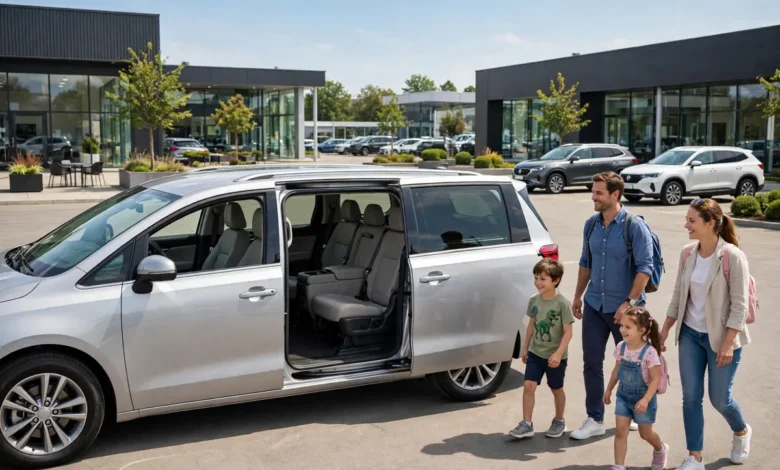
The reason so many families still type this search into Google, even as three-row SUVs fill the roads, is that nothing else moves seven or eight people and their luggage with the same ease. Sliding doors make school car parks and tight parking spaces far less stressful, the low flat floor lets small children and older grandparents climb in without a scramble, and the boxy shape delivers more usable cargo space per pound than almost any SUV at a similar price. This guide walks through the best models available as of November 2026, realistic price ranges drawn from Kelley Blue Book valuations, where to look locally, and the checks that separate a bargain from a money pit.
What Minivans for Sale Near Me Really Means in 2026
Searching for minivans for sale near me in 2026 is a very different exercise from the same search ten years ago, because the minivan segment has shrunk to a small group of survivors while the used market has grown into the place where most of the real choice now lives. Edmunds notes that only four conventional minivan models are available as new vehicles for 2026, and each one has a distinct personality, from the hybrid-only Toyota Sienna to the value-packed Kia Carnival, so the first job of any buyer is to understand those four rather than drowning in dozens of similar-looking listings. Your local search results will mix franchised dealer stock, independent used-car lots, and private sellers, and learning to tell those sources apart matters as much as learning the models themselves.
Local availability also shapes price more than most buyers expect, because a minivan that is common in your area will usually be cheaper than one that has to be shipped in from another region. Family vehicles tend to cluster around suburbs and school districts, which means a buyer in a busy family area often has more choice and stronger negotiating power than someone in a rural spot with a single dealer. Before you visit any forecourt, it helps to widen your search radius to at least fifty miles, compare the same model year and trim across several sellers, and keep a simple note of asking prices, mileage and equipment so that patterns, rather than one persuasive salesperson, drive your decision.
The Best Minivans You Can Buy in 2026
The Toyota Sienna remains the benchmark for most families in 2026, because it is the only minivan sold exclusively as a hybrid and its front-wheel-drive models return an EPA-estimated 36 miles per gallon combined, according to Edmunds, which is a remarkable figure for a vehicle that seats up to eight people. Its 2.5-litre hybrid system produces 245 horsepower, it offers available all-wheel drive for buyers who face snow or rough weather, and its reputation for strong resale value means it holds its price better than most rivals when the time comes to sell. The trade-off is cargo space, because the hybrid battery and fixed second-row seats in some trims limit maximum load volume compared with its rivals, and popular trims can be hard to find without a wait.

The Kia Carnival, Honda Odyssey and Chrysler Pacifica each answer a different family priority, and understanding those differences is the fastest way to narrow your shortlist. The Carnival starts at the lowest price of the group, with the 2026 V6 LX listed from around $38,935 including destination according to comparison data published in 2026, and it pairs that value with a modern cabin, a long ten-year powertrain warranty, and the largest cargo area behind the third row of the petrol models. The Honda Odyssey is the driver’s choice, with a refined 280-horsepower V6, a ten-speed automatic gearbox, Magic Slide second-row seats, and up to 155.8 cubic feet of maximum cargo space, while the Chrysler Pacifica remains the only one with Stow n Go seats that fold flat into the floor, plus available all-wheel drive, although its plug-in hybrid version has been discontinued for 2026.
How Much Should You Pay for a Minivan Near You?
New minivan prices in 2026 span a wide range, with comparison data showing entry points from roughly $38,935 for a base Kia Carnival to around $59,305 for a top-trim Toyota Sienna Platinum with all-wheel drive, and most well-equipped family trims landing somewhere in the mid-forties to low fifties before taxes and fees. That spread of about twenty thousand dollars between the cheapest and most expensive ways into a new minivan is why trim choice matters so much, because a mid-range Carnival or Odyssey often delivers the features families actually use, such as leather seating, rear entertainment and driver assistance systems, for thousands less than a flagship model whose extras may rarely be touched. Always compare prices with destination charges included, since advertised figures sometimes leave that thousand-dollar-plus charge out.
Used prices are where local searching really pays off, and Kelley Blue Book valuations checked in November 2026 give a useful anchor for what is fair. A 2024 Toyota Sienna XLE carried a Fair Purchase Price of around $39,170, while a 2024 Honda Odyssey ranged from about $30,940 for an EX to roughly $36,410 for a top Elite trim, with private-party values typically a few thousand lower and trade-in values lower still. Those figures move with mileage, condition and your postcode, so treat them as a starting point rather than a fixed price, and always run a valuation for the exact vehicle identification number you are considering. If a local asking price sits far above the guide range without a clear reason, such as unusually low mileage or a rare trim, it is a sign to keep looking.
New or Used: Which Minivan Deal Makes More Sense?
Buying new makes the most sense when you plan to keep the van for many years, value a full manufacturer warranty, and want the latest safety technology and fuel economy without worrying about the previous owner’s habits. A new Sienna or Carnival Hybrid also brings lower running costs from day one, and because minivans depreciate more slowly than many other vehicle types, the gap between a nearly-new used example and a brand-new one is often smaller than buyers expect. If you can secure a fair price without expensive add-ons, and you intend to drive the van past a hundred thousand miles, the peace of mind of a new purchase is genuinely worth something.
A used minivan, on the other hand, is usually the smarter financial move when your budget is fixed or you want a higher trim level than you could afford new. A two- or three-year-old Odyssey or Carnival lets someone else absorb the steepest early depreciation, and the money saved can cover a warranty extension, new tyres, or a family holiday. The key is to buy on condition rather than age alone, favouring vans with a full service history, one previous owner, and sensible mileage for their year, while avoiding the cheapest examples of any model, since those are usually cheap for a reason that will become expensive later.
Where to Find Minivans for Sale Near You
When you search for minivans for sale near me, franchised dealers are the natural starting point for most buyers, because they offer certified pre-owned programmes, manufacturer warranties, financing options and the chance to compare several examples of the same model side by side. A certified pre-owned Sienna or Odyssey from a Toyota or Honda dealer will cost more than a similar van from an independent lot, but it arrives with a multi-point inspection, a history check and warranty cover that removes much of the risk, which matters a great deal if you are not confident judging a vehicle yourself. Visiting two or three franchised dealers also gives you a realistic picture of what your local market actually charges, rather than what internet adverts suggest.
Online marketplaces and valuation sites have become just as important as the forecourt, because they let you search every listing within your chosen radius, filter by price, mileage and features, and spot overpriced vans before you waste an afternoon travelling to see them. Kelley Blue Book lists tens of thousands of used vans and minivans across the United States, and its Fair Purchase Price tool gives you an independent benchmark to carry into any negotiation. Private sellers can offer the lowest prices of all, but they provide no warranty and no comeback, so a private purchase should always include an independent pre-purchase inspection by a mechanic you trust.
What to Check Before You Buy a Used Minivan
The mechanical checks for a used minivan are similar to any used car, but a few items deserve special attention because they are expensive to fix on a family van. Sliding doors should open and close smoothly on both sides, including with the power function if fitted, since worn rollers, tired motors and damaged tracks are common and costly. Air conditioning must blow cold from the rear vents as well as the front, because a weak rear system often signals a refrigerant leak or a failing compressor, and the suspension should feel composed over bumps rather than floaty or crashy, which can indicate worn shock absorbers. Take the van on a proper test drive that includes motorway speeds, tight turns and a hill start, and listen for whines, knocks and vibrations.
Paperwork matters just as much as the physical condition, and a careful buyer checks the service history, the number of previous owners, and whether any safety recalls are outstanding before agreeing a price. Minivans often lead hard family lives, so look for signs of heavy towing, accident repairs, and uneven tyre wear that hints at alignment problems, and check the condition of the interior carefully, since stained carpets, broken seat mechanisms and scratched screens all suggest a van that was used hard. A history report from a recognised provider, combined with a professional inspection that typically costs a modest fee, is the cheapest insurance you will ever buy when the alternative is discovering a major fault a month after purchase.
How to Negotiate the Best Minivan Price
Good negotiation starts before you ever meet a salesperson, with a clear target price based on valuation guides, comparable local listings, and a firm maximum you will not exceed. Walk into the dealership knowing the Fair Purchase Price for the exact trim and mileage you want, and be ready to show the seller two or three cheaper comparable vans from nearby, since evidence beats argument every time. Dealers expect negotiation on used vehicles in particular, and the first asking price is rarely the final price, so treat the opening figure as the start of a conversation rather than a fact, and stay polite but firm throughout.
Timing and preparation can save you hundreds of pounds or dollars, because dealers are often more flexible at the end of the month or quarter when sales targets loom, and a buyer who arrives with financing pre-approved and no trade-in to complicate the deal is easier to say yes to. Always ask for an itemised breakdown before signing, and question every fee, from documentation charges to paint protection and fabric treatments, since many of these add cost without adding value. If the dealer will not meet your price, be willing to walk away, because another minivan will appear, and the van you nearly overpaid for will still be there tomorrow if you change your mind.
Is a Minivan Better Than a Three-Row SUV?
Minivans win on practicality in almost every measure that matters to a family, because their sliding doors, low step-in height and flat floors make daily life with children and older passengers noticeably easier. Third-row access in a minivan means walking between the seats rather than clambering over folded ones, the cargo area behind the third row is genuinely useful rather than symbolic, and fuel economy is usually better than a similarly sized SUV, particularly with a hybrid Sienna or Carnival Hybrid. For families who carry people every day rather than occasionally, those small daily conveniences add up to a large quality-of-life difference over years of ownership.
Three-row SUVs fight back with image, towing capacity and all-wheel-drive availability, and for buyers who need to tow a trailer, drive on rough tracks, or simply prefer the higher driving position, an SUV is the honest answer. Models such as the Chevrolet Traverse offer a similar footprint with a more rugged feel, and our guide to the Chevrolet Traverse for sale near you explores that alternative in detail for families torn between the two shapes. The fairest conclusion is that minivans are the better family tool, while SUVs are the better lifestyle statement, and most families who test both back to back discover that the minivan is the vehicle they actually enjoy living with.
Conclusion
Finding the right minivans for sale near me in November 2026 comes down to a simple sequence: understand the four new models, set a realistic budget using Kelley Blue Book valuations, search widely across dealers and online listings, and inspect carefully before you commit. The Toyota Sienna suits buyers who prize fuel economy and resale value, the Kia Carnival delivers the most equipment for the money, the Honda Odyssey rewards drivers who enjoy the journey, and the Chrysler Pacifica remains the cargo-flexibility champion with its Stow n Go seats. Whichever you choose, buying on evidence rather than impulse is what turns a good van into a great deal.
Your next step is to shortlist two models, book test drives on the same day so the comparison is fresh, and run a valuation on every van you seriously consider before talking price. If you are still weighing the minivan against a large SUV, take a look at our related guide to the Chevrolet Traverse for sale near you and compare the two shapes with your whole family present, because the right choice is the one that fits your children, your luggage and your budget at the same time. Take your time, trust the numbers, and the right minivan will be worth the search.
What Is the Cheapest New Minivan You Can Buy in 2026?
As of November 2026, the cheapest route into a new minivan is the Kia Carnival V6 LX, which comparison data lists from around $38,935 including destination charges, making it the most affordable new minivan in the United States by a clear margin. That entry price buys a genuinely well-equipped family vehicle with three rows, modern safety systems and a large cargo area, rather than a stripped-out penalty box, which is why the Carnival has become the default recommendation for budget-conscious families who still want a new van with a full warranty.
The figure to remember is that the cheapest sticker price is not always the cheapest van to own, because fuel economy, insurance, servicing costs and resale value all shape the real cost over five years. A hybrid Sienna costs more up front but can save a high-mileage family a substantial amount on fuel, while a Carnival’s ten-year powertrain warranty reduces the risk of expensive repairs, so always compare total ownership costs rather than the headline price alone before deciding which cheap minivan is genuinely the best value.
Which Minivan Has the Best Fuel Economy?
The Toyota Sienna has the best fuel economy of any conventional minivan in 2026, returning an EPA-estimated 36 miles per gallon combined with front-wheel drive and 35 miles per gallon with all-wheel drive, according to Edmunds, thanks to its hybrid-only powertrain. That figure is far ahead of its petrol rivals, and for a family covering fifteen thousand miles a year it can mean hundreds of dollars saved annually compared with a V6-powered alternative, which is a difference that grows more meaningful with every year of ownership.
The Kia Carnival Hybrid is the next best option, returning around 32 miles per gallon combined in comparison testing, while the Honda Odyssey and Chrysler Pacifica manage around 22 miles per gallon combined with their V6 engines. If fuel economy is your top priority and you drive mostly in town, where hybrids are at their most efficient, the Sienna is the clear winner, but if your driving is mainly long motorway journeys, the gap narrows, and the Carnival Hybrid becomes a very close second choice.
How Many Miles Is Too Many for a Used Minivan?
There is no single mileage figure that makes a used minivan too old to buy, because condition, service history and previous use matter far more than the number on the odometer. A well-maintained Sienna or Odyssey with a full dealer service history can comfortably pass two hundred thousand miles, while a neglected van with half that mileage can be a source of endless repair bills, so the history file should always matter more to you than the dashboard reading when you judge a used family vehicle.
As a practical guide, when you compare minivans for sale near me, a van with around twelve thousand miles per year of its age is average, and anything far above that deserves a closer look at how those miles were covered, since motorway miles are far gentler than years of short school-run journeys. Budget for an independent inspection on any van over sixty thousand miles, check that major services such as transmission fluid changes have been carried out, and walk away from any seller who cannot produce service records, because that missing paperwork is usually hiding a story you do not want to inherit.
Are Minivans Good for Long Road Trips?
Minivans are among the best vehicles ever designed for long road trips, because they combine generous passenger space, a large and easily loaded cargo area, and a comfortable ride that keeps everyone fresh over hundreds of miles. Children can stretch out in the second row, adults can sit in the third row without apology, and features such as rear climate controls, USB charging points and available rear entertainment systems turn a long journey from an endurance test into a genuinely pleasant part of the holiday itself.
The practical advantages show up at every stop, from sliding doors that make service-station breaks quicker to a flat load floor that swallows suitcases, pushchairs and sports equipment without a roof box. A hybrid Sienna adds another benefit on long trips, because its excellent fuel economy means fewer fuel stops, while a Pacifica’s Stow n Go seats let you convert the cabin into a flat-floored cargo van in minutes. For families who travel regularly, a minivan is not a compromise but the single most comfortable way to cover distance together.
Should I Buy a Minivan or a Three-Row SUV?
The honest answer depends on how you will use the vehicle every day, because minivans and three-row SUVs solve the same problem in different ways. If your priority is carrying seven or eight people in comfort, loading pushchairs and luggage easily, and keeping running costs down, a minivan is the better tool, with easier third-row access, more cargo space behind the third row, and generally better fuel economy, particularly from hybrid models such as the Sienna and Carnival Hybrid, and the right answer is the one that fits your daily routine rather than the one that merely looks best in a photograph.
A three-row SUV makes more sense if you need to tow heavy trailers, regularly drive on rough or unpaved surfaces, or simply prefer the higher seating position and tougher image of an SUV. The trade-off is real, because most three-row SUVs have tighter third rows, smaller boots with all seats in use, and higher fuel consumption than an equivalent minivan. Test both shapes with your family and your luggage before deciding, because the vehicle that feels best on a ten-minute drive is not always the one that serves you best over five years of family life.