Urban Air Trampoline Park: Tickets, Attractions, Parties and What to Know Before You Go


An urban air trampoline park is an indoor adventure park where wall-to-wall trampolines sit alongside climbing walls, ropes courses, dodgeball courts and zip lines, giving families a whole day of active play under one roof whatever the weather is doing outside. Urban Air Adventure Park is one of the largest chains of its kind in the United States, with parks across the country, and each location mixes classic trampoline courts with newer attractions such as warrior courses, virtual reality and indoor go-karts, so children of very different ages can all find something that suits them on the same visit.

If you are planning a first visit, a birthday party or a rainy-day outing, this guide explains what an Urban Air park actually offers, how pricing generally works, which ages get the most from it, and the safety rules that matter most. Prices, opening hours and the exact attraction list vary from park to park, so always check your local park’s own page before travelling, but the picture below reflects the chain as a whole as of November 2026, based on Urban Air’s official attraction listings and park information.
What Is an Urban Air Trampoline Park?
Urban Air began as a trampoline park and has grown into a full indoor adventure park, which is an important distinction for first-time visitors who arrive expecting a single room of trampolines. The official Urban Air franchise site describes the concept as an innovative mix of attractions that encourages guests to reach, climb, leap, swing, soar and score, and that description matches what you find inside, because trampolines are only one part of a much larger space that also includes climbing structures, sports courts and rides. The parks are designed as year-round, weather-proof destinations where families can spend several hours without running out of things to do.
Each park is individually owned and operated as a franchise, which means the core experience is consistent while the details change from place to place. One location might have indoor go-karts and laser tag, while another focuses on climbing walls and a larger toddler area, and party rooms, cafes and arcade zones vary in size as well. That local variation is the single most important thing to understand before you go, because a review of a park in one city may describe attractions that your nearest park does not have, so the official park finder and your local park’s attraction list are the only reliable sources for what awaits you.
What Attractions Can You Expect at Urban Air?
The heart of every urban air trampoline park is the trampoline court itself, where interconnected trampolines stretch across the floor and up the walls, letting jumpers bounce, flip and practise tricks in a large open space. Around that centrepiece you will usually find a dodgeball court where the classic school game is played on a bouncing surface, a slam dunk zone where the trampolines give even small children the lift to dunk a basketball, and a runway tumble track for practising flips and tumbling runs. These trampoline-based zones are grouped together in most parks, so children can move between them freely during their session.
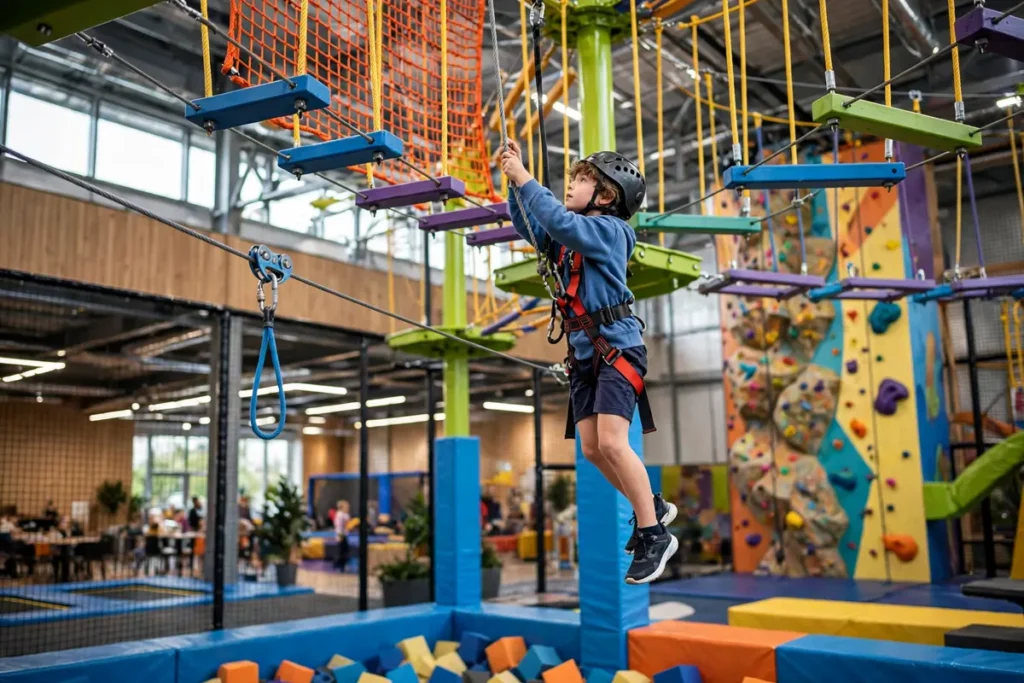
Beyond the trampolines, Urban Air’s official attraction list includes a ropes course suspended high above the floor, climbing walls, the Sky Rider indoor zip line that carries riders across the building, a warrior course inspired by television obstacle competitions, a Battle Beam where two players duel with padded jousting poles above a foam pit, and a Tubes Playground of soft climbing tunnels for younger children. Many parks add further attractions such as bumper cars, virtual reality experiences, indoor go-kart tracks, laser tag, indoor slides and an AirCourt sports court, plus an arcade and a cafe, which means a family can easily fill an afternoon without any child getting bored.
How Much Does Urban Air Cost?
Urban Air does not publish a single national price, because each franchised park sets its own ticket prices, and what you pay depends on your location, the day of the week, the length of your visit and which attractions you want to include. Most parks sell timed jump passes that cover the trampoline areas, with higher-priced unlimited or all-access passes that add the ropes course, climbing walls, zip line and other premium attractions, and many also offer memberships for families who visit regularly. As a rule, expect a basic session to cost roughly what a cinema ticket and a snack would, and an all-access pass to cost noticeably more, but treat any figure you read online as a guide only.
The best way to avoid surprises is to check the ticket page of your specific park before you travel, and to look for the extras that catch families out. Grip socks are required at Urban Air parks, and while some packages include them, other visitors need to buy a pair at the park, so bringing your own approved grip socks can save a small but annoying extra charge. Birthday party packages usually include socks and a private room, memberships often include perks such as discounted guest passes and cafe savings, and off-peak weekday sessions are usually cheaper than busy weekend slots, so a little planning can easily save a family a meaningful amount.
Is Urban Air Good for Different Ages?
Toddlers and pre-schoolers get a surprisingly good experience at Urban Air, because most parks include a dedicated Tubes Playground and a smaller trampoline area designed for children under seven, where soft play tunnels, low climbing frames and gentle bouncing keep little ones safe away from bigger jumpers. These areas are usually supervised and separated from the main courts, which gives parents of young children real peace of mind, although a parent or guardian still needs to stay close, and the smallest children may tire after an hour or so, making a shorter visit the smarter choice for this age group.
Older children and teenagers are the ones who get the most from a full Urban Air visit, because the warrior course, ropes course, climbing walls and zip line are built for bigger bodies and braver spirits, and dodgeball and slam dunk competitions give friendship groups a reason to return week after week. Adults are welcome on the attractions too, and many parents end up joining in once they see how much fun the trampolines are, although the physical effort is real, so wearing comfortable clothes and pacing yourself matters. The honest summary is that ages five to fourteen are the sweet spot, while younger children enjoy the soft play zones and teenagers and adults enjoy the challenge attractions.
Birthday Parties and Group Visits at Urban Air
Birthday parties are one of Urban Air’s biggest draws, and most parks offer several party packages that bundle jump time, a private party room, food and drinks, a party host, and grip socks for the guests into a single price. The usual format gives the children an hour or more on the attractions, followed by time in the party room for cake and food, and the host handles the organisation so parents can actually enjoy the celebration instead of running it. Packages vary by location, so compare what is included rather than just the headline price, and ask whether the cake, invitations and extra guests are covered or charged separately.
Group visits work well for school trips, sports teams, youth groups and corporate team-building days, because the mix of physical challenges suits groups with different abilities and confidence levels. Many parks offer group rates, reserved time slots and private hire options, and booking ahead is essential for larger groups, especially at weekends or during school holidays when party rooms fill up quickly. If you are organising a group, call the park directly rather than booking online, because the team can usually tailor the session length and the attractions included to match the age range and energy level of your group.
Safety Rules Every Parent Should Know
Safety is the part of an Urban Air visit that parents should take most seriously, because trampoline parks are genuinely physical environments and injuries usually happen when rules are ignored rather than when equipment fails. Urban Air states on its official franchise site that safety is its top priority and that its attractions meet or exceed industry safety standards, and parks enforce rules such as one jumper per trampoline section, no double bouncing, no flips without supervision in designated areas, and height or weight limits on certain attractions. Waivers are required before anyone jumps, and children must be supervised by an adult at all times, so read the rules with your children before you arrive rather than at the door.
The most useful safety habits are simple ones that cost nothing, such as making sure children wear proper grip socks, removing jewellery and emptying pockets before jumping, warming up with gentle bouncing before attempting anything ambitious, and steering younger children away from courts where older teenagers are practising flips. If a child feels tired, encourage a break in the cafe or arcade rather than pushing through, because most trampoline injuries happen when jumpers are exhausted and their coordination drops. Staff members monitor the courts, but they cannot watch every jumper at once, so your supervision is the most important safety measure of all.
How to Plan Your First Visit to Urban Air
A little preparation turns a good Urban Air visit into a great one, and the first step is choosing the right time, because weekday mornings and early afternoons are usually quieter than weekend sessions, which means shorter queues for the popular attractions and more space on the trampolines. Arrive at least fifteen minutes before your session so you have time to complete waivers, collect grip socks and store your belongings, and book online in advance during school holidays, when walk-in sessions can sell out completely. Checking your local park’s timetable also tells you whether any attractions are closed for maintenance on the day you plan to visit.
What to wear matters more than most first-timers expect, because comfortable athletic clothing, tied-back hair and grip socks make every attraction easier and safer. Leave valuables at home or use the lockers provided, bring a water bottle since jumping is thirsty work, and keep a change of clothes in the car for the journey home, because children emerge hot, happy and often sweaty. Finally, plan your food around the visit rather than during it, since most parks have a cafe but outside food is generally not allowed, and a hungry child bounces badly, so a proper meal before you arrive and a snack afterwards will keep energy levels high throughout the session.
Conclusion
An urban air trampoline park is far more than a room full of trampolines, because the mix of dodgeball, climbing walls, ropes courses, zip lines, warrior courses and soft play means that children of different ages and confidence levels can all enjoy the same day out together. The keys to a great visit are simple: check your local park’s attraction list and prices before you travel, choose a quieter time if you can, arrive early with waivers completed and grip socks ready, and keep a close eye on younger children while older ones test themselves on the bigger challenges. Done well, it is one of the best-value active family days out available in any weather.
If you are still deciding whether an indoor adventure park suits your family, start with a basic trampoline session rather than the most expensive all-access pass, and let your children tell you which attractions they want to try next time. For more ideas for family days out, our guide to indoor play in Cornwall looks at another indoor option for rainy days, and it pairs well with this guide when you are planning a week of activities. Book ahead, jump safely, and enjoy the rare sight of your children happily exhausted by the end of the afternoon.
What Age Is Urban Air Best For?
Urban Air works best for children aged around five to fourteen, because that is the age range where the trampolines, dodgeball courts, climbing walls, ropes course and warrior course all feel exciting rather than overwhelming. Children in this group are big enough to use most attractions independently, confident enough to try the climbing and zip line challenges, and social enough to enjoy the team games, which is why birthday parties for this age group are so popular at Urban Air parks across the country.
Younger children are still welcome, and most parks provide a dedicated soft play and toddler trampoline area for children under seven, but the visit will be shorter and calmer, and parents should expect to stay close throughout. Teenagers and adults can also enjoy the challenge attractions, although older teenagers may find the main trampoline courts less exciting than the warrior course and climbing walls. The practical answer is that almost any child over three will find something to enjoy, but the full all-access experience delivers its best value for primary and early secondary school ages.
Do Adults Have to Pay at Urban Air?
In most Urban Air parks, adults who only watch from the sidelines do not need to buy a jump pass, because spectators can enter the building, use the cafe and seating areas, and supervise their children without paying for attractions. This is one of the features parents appreciate most, since it means a family outing does not automatically cost a ticket for every person who walks through the door, and grandparents or non-jumping adults can join the day out without paying for activities they will not use.
Adults who want to jump, climb or use the attractions do need to buy a pass, just like children, and the same waiver and grip sock rules apply to them as to everyone else. Prices for adult passes are generally the same as children’s passes at most parks, although some locations offer family bundles or off-peak discounts that reduce the cost for groups. Because policies can vary between franchised locations, check your local park’s pricing page before you go, and decide in advance whether you plan to watch or join in, so there are no surprises at the entrance.
Do You Need Special Socks at Urban Air?
Yes, grip socks are required for everyone using the trampolines and attractions at Urban Air, and this rule is enforced consistently across the chain for safety reasons. Ordinary socks are too slippery on trampoline surfaces, and bare feet are not allowed, so the special socks with rubber grips on the soles are an essential part of the visit, and staff will check that every jumper is wearing them before allowing access to the courts. The grip pattern is designed to work on trampoline beds, climbing structures and the ropes course alike, so one pair covers every attraction you will use during your session.
If you already own Urban Air grip socks from a previous visit, bring them with you, because they can usually be reused and that saves buying another pair at the park. If you do not have any, pairs are sold at the park reception, and they are also included in many birthday party packages, so party guests rarely need to buy their own. The socks are inexpensive, but the charge can still annoy families who were not expecting it, so adding grip socks to your packing list is the simplest way to keep the visit smooth and surprise-free.
Can You Bring Your Own Food into Urban Air?
Most Urban Air parks do not allow outside food and drink inside the park, because they operate their own cafe and party catering, and this policy is standard across the chain’s franchised locations. The cafe usually sells snacks, drinks, pizza and light meals, so families can eat without leaving the building, and birthday party packages include food and drinks as part of the booking, which covers the celebration without anyone needing to bring a packed lunch. Water bottles for the jumpers are usually welcome, but full meals, takeaway food and large coolers should be left at home or eaten before you arrive.
There are sensible exceptions that most parks will accommodate, particularly for children with allergies, medical dietary needs or baby food, and it is always worth calling your local park in advance to explain your situation rather than assuming the answer will be no. For everyone else, the practical approach is to eat a proper meal before your visit and plan a snack or meal at the cafe afterwards, because jumping on a full stomach is uncomfortable, and a hungry child will tire much faster than a well-fed one on the trampolines.
How Long Should You Plan to Spend at Urban Air?
Most families find that two to three hours is the right length for an Urban Air visit, because that gives children time to try the trampolines, dodgeball, climbing walls and ropes course without becoming exhausted. A basic jump session usually lasts one to two hours, while an all-access pass encourages a longer stay, and younger children will often be ready to leave after about an hour, whereas older children with an unlimited pass can happily fill an entire afternoon moving between attractions.
The smartest way to plan is to book the session length that matches your children’s ages and energy levels, arrive a little early for waivers and socks, and leave unscheduled time afterwards for the cafe and arcade rather than rushing straight to the next activity. If you are travelling a long way to the park, a longer session makes the journey worthwhile, but if your local park is nearby, shorter and more frequent visits often work better than one exhausting marathon. Listen to your children, watch for tiredness, and end the visit while everyone is still happy rather than waiting until they are worn out.
