

Different Kinds of Rash: A Complete Guide to Common Skin Rashes
Different kinds of rash include eczema, contact dermatitis, hives, heat rash, psoriasis, fungal infections such as ringworm and athlete’s foot, shingles, scabies, and impetigo, and each one looks and feels different, which is why identifying the type matters. A rash is a change in the skin’s colour, texture, or appearance, and it can be caused by an allergy, an infection, irritation, heat, or an underlying health condition, so the same red, itchy patch can have several possible causes. This guide explains the most common kinds of rash, how to tell them apart, when a rash needs urgent medical attention, and how to look after your skin at home, but it is general information only and cannot replace a doctor’s diagnosis.


It is important to understand that a rash on its own rarely tells the whole story, because the cause often depends on where the rash appears, what it looks like, whether it itches or hurts, and what else is happening in your body. A rash that appears after using a new soap is different from one that appears with a fever, and a rash that spreads quickly needs different attention from one that has been present for months. If you are unsure what is causing your rash, or if it is getting worse, the safest step is to speak to a doctor or pharmacist, because they can examine your skin and ask the right questions to identify the cause.
What Is a Rash and Why Does It Appear?
A rash is any change in the skin that affects its colour, texture, or appearance, and it can appear as redness, bumps, blisters, scaling, or swelling, either in one small area or across a large part of the body. Rashes appear because the skin is reacting to something, and that something can be an irritant such as soap or detergent, an allergen such as a food or medicine, an infection such as a virus or fungus, or a condition that affects the immune system, such as eczema or psoriasis. The skin is the body’s largest organ and its first line of defence, so it often shows the first signs when something is wrong, whether that is a reaction to a new product or a symptom of an illness.
The way a rash appears can give useful clues about its cause, because different kinds of rash have different patterns. A rash that appears in a straight line or in the shape of an object may be caused by contact with something, while a rash that appears on both sides of the body in the same places is more likely to be caused by something inside the body, such as a medicine or an infection. A rash that itches intensely is different from one that burns or hurts, and a rash with blisters is different from one that is dry and scaly. Noticing these details and telling your doctor about them can help with diagnosis, but it is important not to try to diagnose a rash from photographs alone, because many different conditions can look similar. Learning about the different kinds of rash can help you describe what you see to your doctor, which makes diagnosis easier and helps you get the right treatment sooner.
What Are the Most Common Kinds of Rash?
The most common kinds of rash include eczema, contact dermatitis, hives, heat rash, and psoriasis, and each one has a distinct appearance and cause. Eczema, also known as atopic dermatitis, causes dry, itchy, inflamed patches of skin, often in the creases of the elbows and knees, and it is linked to a tendency towards allergies and sensitive skin. Contact dermatitis happens when the skin reacts to something it has touched, such as a cosmetic, a metal, or a cleaning product, and it usually appears only where the skin came into contact with the irritant or allergen. Hives, also called urticaria, appear as raised, itchy, red welts that can come and go quickly, and they are often caused by an allergic reaction to food, medicine, or an insect sting.
Heat rash, also known as prickly heat, happens when sweat gets trapped under the skin, usually in hot, humid weather or after exercise, and it appears as small, itchy red bumps, often on the chest, back, or neck. Psoriasis causes thick, scaly patches of skin, most often on the elbows, knees, and scalp, and it is a long-term condition linked to the immune system. Fungal infections such as ringworm and athlete’s foot cause ring-shaped or scaly patches, while shingles causes a painful, blistering rash in a band on one side of the body. Scabies, caused by tiny mites burrowing into the skin, causes intense itching, especially at night, and impetigo, a bacterial infection, causes golden, crusty sores, often around the mouth and nose. Because these conditions can look similar, a doctor’s examination is often needed to tell them apart.
How Can You Tell Eczema From Contact Dermatitis?
Eczema and contact dermatitis can look similar, because both cause red, itchy, inflamed skin, but they have different causes and different patterns, and telling them apart matters because the treatment is different. Eczema is a long-term condition linked to sensitive skin and a tendency towards allergies, and it often appears in the creases of the elbows and knees, on the hands, or on the face, and it tends to come and go over months or years. People with eczema often have a family history of allergies, asthma, or hay fever, and their skin is generally dry and easily irritated, even when there is no visible rash.
Contact dermatitis, by contrast, is a reaction to something specific that the skin has touched, and it appears only where the contact happened, which can be a helpful clue. Irritant contact dermatitis is caused by a substance that damages the skin, such as a strong detergent or a chemical, while allergic contact dermatitis is caused by an allergic reaction to something such as nickel in jewellery, a fragrance, or a preservative in a cosmetic. The rash usually appears within a day or two of contact, and it often improves once the trigger is removed. If you suspect contact dermatitis, think about anything new that has touched your skin recently, such as a new soap, a new piece of jewellery, or a new laundry product, and tell your doctor, because they may be able to identify the trigger.
What Causes Hives and Heat Rash?
Hives are caused by the release of histamine in the skin, which happens when the immune system reacts to something, and the most common triggers are foods such as nuts, shellfish, or eggs, medicines such as antibiotics or painkillers, insect stings, and infections. The raised, itchy welts of hives can appear suddenly and move around the body, and they often disappear within a day, although new ones can keep appearing for days or weeks. In most cases, hives are uncomfortable but not dangerous, and they settle on their own or with antihistamines, but if hives appear together with swelling of the face, lips, or tongue, or with difficulty breathing, this is a medical emergency and you should call 999 immediately.
Heat rash is caused by blocked sweat ducts, which happens when the body sweats more than usual and the sweat cannot escape through the skin, and it is most common in hot, humid weather, after exercise, or when wearing tight clothing that does not allow the skin to breathe. It appears as small, itchy red bumps, often on the chest, back, neck, or in skin folds, and it usually improves on its own once the skin is cooled down and kept dry. Wearing loose, breathable clothing, staying in a cool environment, and avoiding heavy creams that block the pores can all help. Heat rash is different from hives because it is caused by heat and sweat rather than an allergic reaction, and it does not usually spread beyond the areas where sweat is trapped.
When Is a Rash a Sign of Something Serious?
Most rashes are not serious, but some are a sign that you need urgent medical help, and knowing the warning signs can make a real difference. You should call 999 or go to an emergency department immediately if a rash appears together with swelling of the face, lips, or tongue, difficulty breathing or swallowing, or a feeling of faintness, because these are signs of a severe allergic reaction. You should also seek urgent help if a rash does not fade when you press a glass against it, which is a test the NHS recommends for checking a rash that could be linked to meningitis, especially if the person also has a fever, a stiff neck, or unusual drowsiness.
Other warning signs include a rash with blistering or peeling skin, a rash that is very painful rather than itchy, a rash that spreads very quickly, or a rash that appears together with a high fever and a feeling of being very unwell. The NHS advises calling 111 or speaking to a doctor promptly in these situations, because they may need to examine the person urgently. A rash that does not improve after a few days of home care, a rash that keeps coming back, or a rash that affects a baby or young child should also be checked by a doctor, because children can become unwell quickly. When in doubt, it is always better to seek medical advice than to wait and hope, because a doctor can assess the rash properly and arrange treatment if it is needed.
How Should You Look After a Rash at Home?
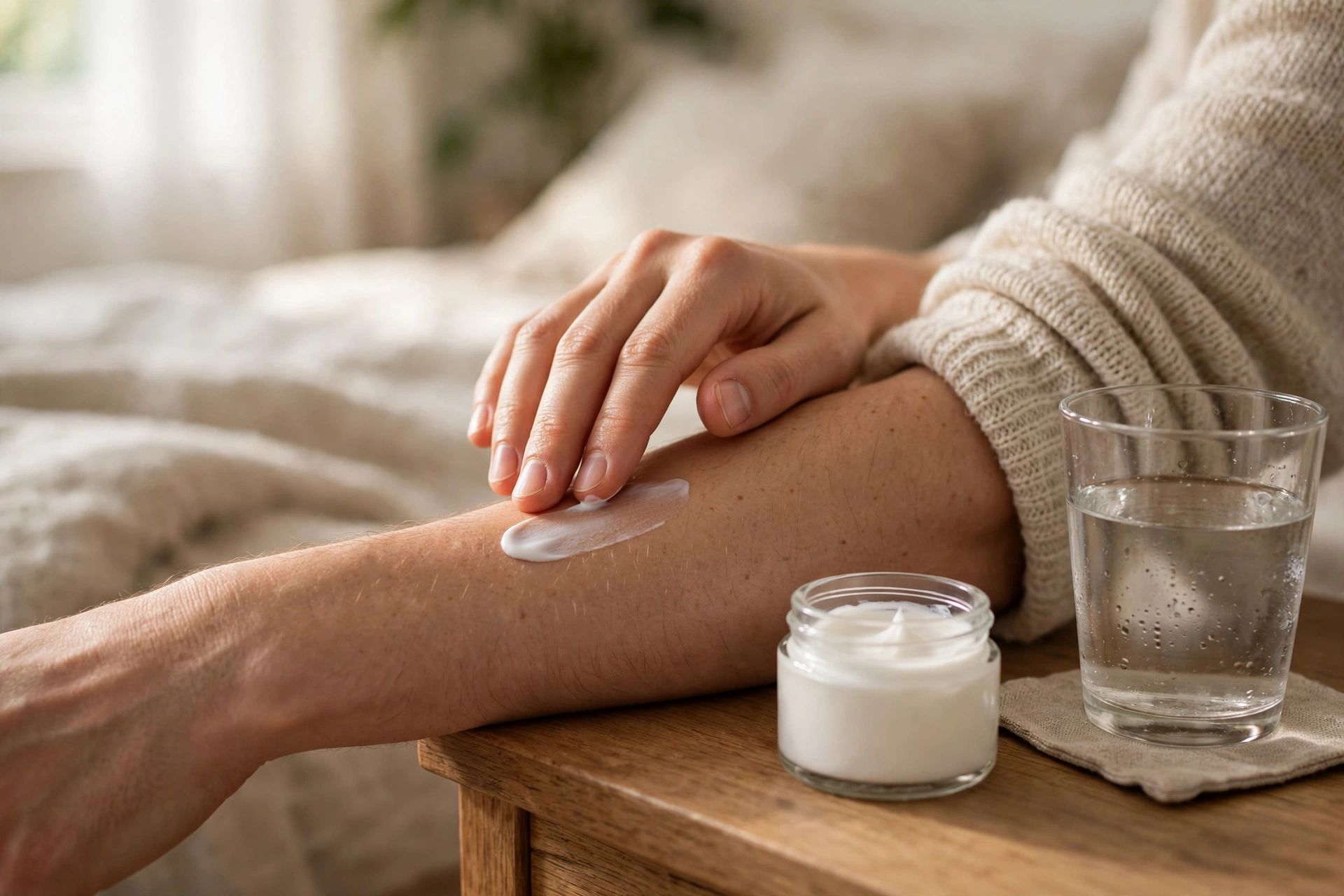
Looking after a rash at home starts with keeping the skin clean, cool, and moisturised, and avoiding anything that might make it worse, such as scratching, harsh soaps, or new products. Wash the affected area gently with lukewarm water and a mild, fragrance-free cleanser, pat the skin dry rather than rubbing it, and apply a simple, fragrance-free moisturiser to keep the skin barrier healthy. Avoid scratching the rash, because this can break the skin and increase the risk of infection, and keep your nails short if the rash is very itchy, especially in children. Loose, breathable clothing made from cotton can help, because it allows air to reach the skin and reduces irritation.
Over-the-counter treatments can help with some rashes, such as a simple moisturiser for dry skin, a mild hydrocortisone cream for mild inflammation, or an antihistamine for itching, but these should only be used as directed on the packaging and for a short period. If you are unsure which product to use, ask a pharmacist, because they can recommend something suitable and tell you when a doctor’s appointment is needed. You should also think about what might have caused the rash, such as a new soap, a new food, or a new medicine, and stop using anything suspicious until you have spoken to a healthcare professional. If the rash does not improve within a few days, gets worse, or shows signs of infection such as spreading redness, warmth, or pus, see a doctor promptly.
Conclusion
Different kinds of rash include eczema, contact dermatitis, hives, heat rash, psoriasis, fungal infections, shingles, scabies, and impetigo, and each one has its own appearance, cause, and treatment. Telling them apart depends on where the rash appears, what it looks like, whether it itches or hurts, and what else is happening in your body, and a doctor’s examination is often needed to make a firm diagnosis. Most rashes can be looked after at home with gentle skincare, moisturiser, and by avoiding triggers, but some need urgent medical attention, particularly if there is swelling of the face or difficulty breathing, a rash that does not fade under a glass, or a high fever with a feeling of being very unwell. This article is general information only, so if you are worried about a rash, speak to your doctor or pharmacist, because they can examine your skin and give advice that fits your situation.
What Is the Most Common Kind of Rash?
The most common kind of rash is eczema, also known as atopic dermatitis, which affects millions of people and causes dry, itchy, inflamed patches of skin, often in the creases of the elbows and knees. Contact dermatitis and hives are also very common, with contact dermatitis caused by something the skin has touched and hives caused by an allergic reaction or infection. The most common kind of rash for any individual depends on their age, their skin type, and what they have been exposed to, so a doctor’s examination is often needed to identify the exact cause. Of all the different kinds of rash, eczema is the one doctors see most often in general practice, although contact dermatitis and hives are also very common.
How Long Does a Rash Usually Last?
How long a rash lasts depends on its cause, with hives often disappearing within a day, heat rash improving within a few days once the skin is cooled, and contact dermatitis settling within a week or two once the trigger is removed. Long-term conditions such as eczema and psoriasis can last for months or years, with periods of improvement and flare-ups, and they usually need ongoing care. If a rash has not improved after a few days of home care, or if it keeps coming back, see a doctor, because it may need specific treatment.
Can a Rash Be a Sign of an Allergy?
Yes, a rash can be a sign of an allergy, and allergic reactions commonly cause hives, contact dermatitis, or a widespread itchy rash. Common allergens include foods such as nuts, shellfish, or eggs, medicines such as antibiotics, insect stings, and substances that touch the skin such as nickel, fragrances, or latex. If a rash appears together with swelling of the face, lips, or tongue, or with difficulty breathing, call 999 immediately, because this is a sign of a severe allergic reaction that needs emergency treatment.
When Should I See a Doctor About a Rash?
You should see a doctor about a rash if it does not improve after a few days of home care, if it keeps coming back, if it is very painful, if it shows signs of infection such as spreading redness, warmth, or pus, or if it appears together with a fever. You should seek urgent help by calling 999 if there is swelling of the face, lips, or tongue, difficulty breathing, a rash that does not fade when a glass is pressed against it, or a stiff neck with drowsiness. A doctor can examine the rash, ask about possible triggers, and arrange the right treatment.
What Should I Put on a Rash?
What you should put on a rash depends on the type of rash, but a simple, fragrance-free moisturiser is usually a good starting point, because it protects the skin barrier and reduces dryness and itching. A mild hydrocortisone cream can help with mild inflammation, and an antihistamine can help with itching, but both should only be used as directed and for a short period. Avoid putting new or heavily fragranced products on a rash, and ask a pharmacist for advice if you are unsure, because they can recommend a suitable product and tell you when a doctor’s appointment is needed.
