
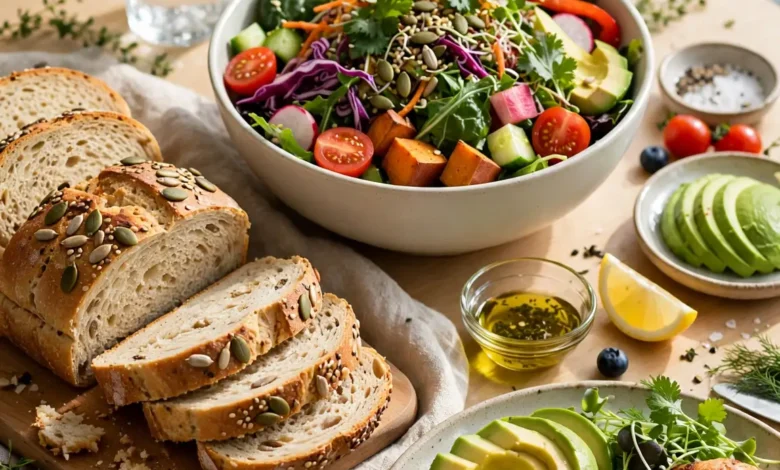
Gluten free food near me is a search that matters far more than most food queries, because for people with coeliac disease, finding food that is genuinely free from gluten is not a preference but a medical need, and the difference between a restaurant that understands cross-contamination and one that simply removes the bread can be the difference between a safe meal and days of illness. The good news is that gluten-free eating has improved dramatically in recent years, with dedicated bakeries, clearly labelled menus, knowledgeable staff and delivery apps that filter by dietary need, so a good gluten-free meal is now available in most UK towns. This guide explains what gluten-free really means, how to find safe options near you, what to look for in a restaurant, which dishes work best, and how to order takeaway without taking risks.
What Does Gluten Free Food Mean?
Gluten free food means food that contains no gluten, which is a protein found in wheat, barley and rye, and the term covers two different things that are often confused: food that is naturally free from gluten, such as rice, potatoes, fruit, vegetables, meat, fish and eggs, and food that has been made without gluten-containing ingredients, such as gluten-free bread, pasta and cakes, which use alternative flours. For most people who eat gluten-free by choice, the distinction matters little, but for people with coeliac disease, it matters enormously, because even a tiny amount of gluten can cause damage, and a dish that is gluten-free by recipe can still be unsafe if it was prepared in a kitchen where flour is in the air or on shared surfaces. The NHS explains that coeliac disease is an autoimmune condition in which eating gluten damages the lining of the small intestine, which is why a strict gluten-free diet is the only treatment, and why cross-contamination is taken so seriously.
Understanding the label is the first skill of gluten-free eating, because in the UK, food labelled “gluten-free” must contain no more than 20 parts per million of gluten, a legal standard that gives coeliacs a reliable benchmark when they shop, while menus that say “gluten-free option available” are making a softer claim that needs a conversation with the staff. Oats are a special case, since pure oats are naturally gluten-free but are often contaminated with wheat during farming and processing, so only oats specifically labelled gluten-free are safe for coeliacs, and this is one of the most common mistakes in gluten-free cooking. Soya sauce, stock cubes, processed meats and some spice mixes can also hide gluten, which is why a good gluten-free restaurant trains its staff to check ingredients rather than guessing, and why asking questions is always better than assuming.
How to Find Gluten Free Food Near Me
Finding gluten free food near me starts with the tools that already filter by diet, because Google Maps lets you search “gluten free” and see restaurants, cafes and bakeries with reviews that mention gluten-free options, while delivery apps such as Just Eat, Deliveroo and Uber Eats all offer a gluten-free filter that narrows the menu to dishes marked as safe. The most useful reviews are the ones written by coeliacs themselves, since they mention the details that matter, such as whether the staff understood cross-contamination, whether the kitchen has a separate fryer, and whether the meal caused a reaction, and those reviews are far more informative than a generic five-star rating. Coeliac UK, the national charity for people with coeliac disease, also provides guidance and resources for eating out, and its accreditation scheme recognises venues that meet its standards, which is a useful mark to look for when you are choosing somewhere new.

Local knowledge still beats an app when you are hunting for gluten free food near me, because the best recommendations come from local coeliac support groups, gluten-free social media groups and friends who eat gluten-free regularly, and those people will tell you which cafes take it seriously and which ones merely pay lip service. Dedicated gluten-free bakeries are worth seeking out, since they remove the cross-contamination risk entirely, and many towns now have at least one cafe or bakery that is fully gluten-free, often run by someone with coeliac disease themselves. If you are visiting a new area, search before you travel, save two or three options rather than relying on one, and call ahead to confirm, since a restaurant’s gluten-free menu can change, and a kitchen that was safe last month may have a new chef who is less careful.
What to Look for in a Gluten-Free Friendly Restaurant
A genuinely gluten-free friendly restaurant shows its understanding before you even order, because the menu marks gluten-free dishes clearly, the staff can explain which dishes are safe and how they are prepared, and nobody looks blank when you mention cross-contamination. The best venues train their staff to ask the right questions, such as whether your need is an allergy, coeliac disease or a preference, since the answer changes how carefully the kitchen must work, and they will tell you honestly when a dish cannot be made safe rather than guessing. Look for a separate fryer for gluten-free food, since shared fryers are one of the most common sources of contamination, and ask whether the kitchen uses separate chopping boards, utensils and preparation areas, because those details separate a restaurant that understands coeliac disease from one that simply removes the bun.
The atmosphere and attitude of the staff matter just as much as the kitchen setup when you are judging gluten free food near me options, because a restaurant that takes dietary needs seriously will welcome your questions rather than treating them as an inconvenience, and the person serving you should be able to check with the kitchen rather than guessing. Warning signs include a menu that marks almost everything as gluten-free without explanation, staff who say “it should be fine” without checking, and a kitchen that cannot tell you whether its chips share a fryer with battered food, since those are the places where mistakes happen. A good restaurant will also have a clear allergen menu available, as required by UK food labelling rules, and will be happy to show it to you, which is a legal requirement that also happens to be a useful test of how seriously the business takes food safety.
Is Gluten Free Food Safe for Coeliacs?
Gluten free food is safe for coeliacs only when it is prepared with proper care, because coeliac disease is an autoimmune condition in which even small amounts of gluten can damage the small intestine, and the NHS is clear that a strict gluten-free diet is the only treatment, which means that cross-contamination is not a minor concern but the central risk of eating out. A dish can be gluten-free by recipe yet unsafe to eat if it was cooked on a shared grill, fried in oil used for battered food, prepared on a flour-dusted surface, or served with a garnish that contains gluten, and these are the risks that a knowledgeable restaurant manages and a careless one ignores. That is why telling the restaurant that you have coeliac disease, rather than simply asking for a gluten-free option, matters so much, since it signals to the kitchen that the standard of care must be higher.
The practical steps for safe eating out with coeliac disease are straightforward once you know them, and they start with choosing restaurants that understand the condition, asking about fryers, grills and preparation areas, and ordering dishes that are naturally gluten-free rather than heavily adapted ones, since a grilled fish with rice and vegetables is inherently safer than a gluten-free pizza made in a flour-filled kitchen. Dedicated gluten-free venues remove the risk entirely, and they are the safest choice when you are in an unfamiliar town, while a regular restaurant with a trained team and a clear allergen process can also be safe if you communicate clearly. Coeliac UK provides detailed guidance on eating out, and reading it before a trip or a special occasion is one of the most useful things a newly diagnosed coeliac can do.
What Gluten Free Dishes Should You Try?
The best gluten free dishes are the ones that were never built around wheat in the first place, because a naturally gluten-free meal does not need substitutes or compromises, and it is usually the tastiest option on the menu. Grilled fish or chicken with rice and vegetables, a Thai curry with rice, a Mexican taco on a corn tortilla, a Vietnamese pho, or a simple salad with a protein topping are all naturally gluten-free and widely available, and they taste like themselves rather than like a lesser version of something else. Gluten-free pasta, pizza and bread have improved enormously in recent years, and a good gluten-free pizza from a dedicated kitchen can be genuinely excellent, but a poor one is dry and disappointing, so it is worth choosing dishes that play to the kitchen’s strengths rather than ordering the most heavily adapted item on the menu.
Bakeries deserve a special mention when you are exploring gluten free food near me, because a dedicated gluten-free bakery produces bread, cakes and pastries that are often indistinguishable from wheat-based versions, and many people without coeliac disease buy from them simply because the food is good. Look for bakeries that bake on site, use a mix of rice, potato and tapioca flours, and clearly label everything, since those are the signs of a serious operation, and ask for recommendations rather than choosing at random, since a good gluten-free brownie or loaf is a revelation and a bad one is a waste of money. Breakfast is another strong meal for gluten-free eaters, since eggs, bacon, mushrooms, tomatoes and gluten-free toast make a full, satisfying plate with no compromises at all.
Gluten Free Takeaway and Delivery: What Works Best?
Gluten free takeaway and delivery work best when you order from a restaurant that takes dietary needs seriously, because the risks of cross-contamination do not disappear when food leaves the kitchen, and a delivery driver who stacks your gluten-free meal under a wheat-based order can undo all the kitchen’s careful work. Delivery apps that filter by gluten-free are a good starting point, but the filter only reflects what the restaurant has marked, so it is worth reading the restaurant’s own reviews from coeliac customers and, where possible, ordering directly from the restaurant so you can speak to a real person about your needs. Dishes that travel well are the safest choices for delivery, since a curry with rice, a grilled meat with vegetables, or a salad travels far better than a gluten-free pizza or a burger, which can go soggy and lose their texture in a sealed box.
Packaging is another detail that matters for gluten free food near me delivery orders, because your meal should be packed separately from other orders, clearly labelled, and sealed in a way that prevents anything from falling in during transport, and a restaurant that does this well is showing you it understands the whole process. If you order regularly from the same place, building a relationship with the staff helps, since they will remember your requirements and take extra care, and if a delivery goes wrong, tell the restaurant calmly and clearly, since most good businesses would rather fix the problem than lose a regular customer. For the safest delivery experience, choose a dedicated gluten-free venue when one is available, order dishes that travel well, and eat as soon as the food arrives rather than leaving it to cool.
Conclusion
Gluten free food near me is easier to find and better to eat than it has ever been, because dedicated bakeries, clearly labelled menus, knowledgeable staff and delivery filters have made safe, tasty gluten-free eating available in most UK towns, and the key is knowing what to look for rather than simply trusting a label. Choose restaurants that understand cross-contamination, ask about fryers and preparation areas, tell the staff clearly whether your need is coeliac disease or a preference, and favour dishes that are naturally gluten-free over heavily adapted ones. The difference between a restaurant that takes gluten-free seriously and one that merely removes the bread is the difference between a safe meal and a risky one, and it is worth the effort of finding the right place.
Start with one well-reviewed local cafe or bakery, ask the staff about their processes, try a naturally gluten-free dish, and build from there, since once you find a place you trust, it becomes a regular part of your routine rather than a source of anxiety. Keep Coeliac UK’s guidance in mind, save the places that get it right, and share them with other gluten-free eaters, because good recommendations are how this community finds its best meals. For another special-diet food guide, our vegan food suppliers article follows the same approach to finding food that fits your needs.
What Foods Are Naturally Gluten Free?
Many everyday foods are naturally gluten free, including rice, potatoes, corn, fruit, vegetables, meat, fish, eggs, milk, cheese and butter, and these form the foundation of a gluten-free diet without any special products. The foods to avoid are those made from wheat, barley and rye, which includes ordinary bread, pasta, cakes, biscuits, crackers and most breakfast cereals, as well as beer and many processed foods that use wheat as a thickener or filler. Oats are a special case, since pure oats are naturally gluten-free but are often contaminated with wheat, so only oats specifically labelled gluten-free are safe for coeliacs, and soya sauce, stock cubes and some spice mixes can also hide gluten, so checking labels remains important even for apparently simple foods.
Is Gluten Free Food Healthier?
Gluten free food is not automatically healthier than food containing gluten, because a gluten-free label says nothing about sugar, fat, salt or nutritional value, and many gluten-free breads, cakes and biscuits contain more sugar and fat than their wheat-based equivalents to make up for the missing gluten. A diet built on naturally gluten-free whole foods such as vegetables, rice, fish and lean meat can be very healthy, but a diet built on processed gluten-free snacks is not, and the healthiness of any food depends on its ingredients rather than on a single label. For people with coeliac disease, a gluten-free diet is essential medicine rather than a health choice, while for people without a medical need, there is no good evidence that avoiding gluten improves health, and cutting out whole food groups without advice can reduce fibre and nutrient intake.
Can I Eat at a Normal Restaurant if I Am Coeliac?
Yes, you can eat at a normal restaurant if you are coeliac, provided the restaurant understands coeliac disease and takes cross-contamination seriously, and many regular restaurants serve coeliacs safely every day with trained staff and clear allergen processes. The key steps are to tell the restaurant clearly that you have coeliac disease, ask about fryers, grills and preparation areas, choose dishes that are naturally gluten-free, and be ready to walk away if the staff cannot answer your questions or seem unsure. Dedicated gluten-free venues are the safest option, particularly in an unfamiliar town, but a well-run regular restaurant with a knowledgeable team can be just as safe, and reading reviews from other coeliacs is the fastest way to tell the two apart.
Is Sourdough Bread Gluten Free?
No, sourdough bread is not gluten free, because it is made from wheat flour, and although the long fermentation process breaks down some of the gluten, it does not remove enough to make it safe for people with coeliac disease. Some people with a mild wheat sensitivity find sourdough easier to digest than ordinary bread, but that is a different issue from coeliac disease, and anyone with coeliac disease should never eat sourdough made from wheat, barley or rye flour. True gluten-free sourdough does exist, made from gluten-free flours such as rice or buckwheat, and it is sold by specialist bakeries, so if you want sourdough, look for one specifically labelled gluten-free rather than assuming that fermentation has made ordinary sourdough safe.
How Do I Know if Food Is Really Gluten Free?
You can tell whether food is really gluten free by checking the label, because in the UK, food labelled “gluten-free” must contain no more than 20 parts per million of gluten, which is a legal standard that coeliacs can rely on, and menus should also have an allergen guide available on request. In a restaurant, ask the staff directly about ingredients, fryers and preparation areas, and judge their answers, since a knowledgeable team will explain their processes clearly while an unsure team is a warning sign. Look for Coeliac UK accreditation where it is displayed, read reviews from other coeliacs, and remember that “may contain traces” and “made in a factory that handles wheat” are different warnings with different levels of risk, so ask the restaurant what they mean in practice.

