Fragrance Store Near Me: How to Find the Right Shop and Choose a Scent You Will Love
A fragrance store near me is the best place to start when you want to buy perfume, because you can smell the scent on your own skin before spending any money, ask trained staff for honest advice, and compare several bottles side by side in one visit. The right shop will stock a wide range of brands, offer tester bottles and blotter strips, and give you time to decide without pressure, so you leave with a fragrance that genuinely suits you rather than one that simply smelled nice on a spray card. This guide explains how to find that kind of shop in your area, what to look for when you walk in, and how to test perfume properly.


Finding a good local perfume shop is easier than most people expect, and a fragrance store near me search usually turns up department stores, beauty chains, independent perfumeries and discount outlets within a short drive of home. The trick is knowing which of those options fits your budget and your taste, because a large department store offers breadth and familiar designer names, while a small independent boutique often carries niche and artisan brands you will not find anywhere else. Before you set out, it helps to check opening hours, read recent customer reviews, and make a short list of the scents you already like, so your visit stays focused and enjoyable.
What a Good Fragrance Store Should Offer
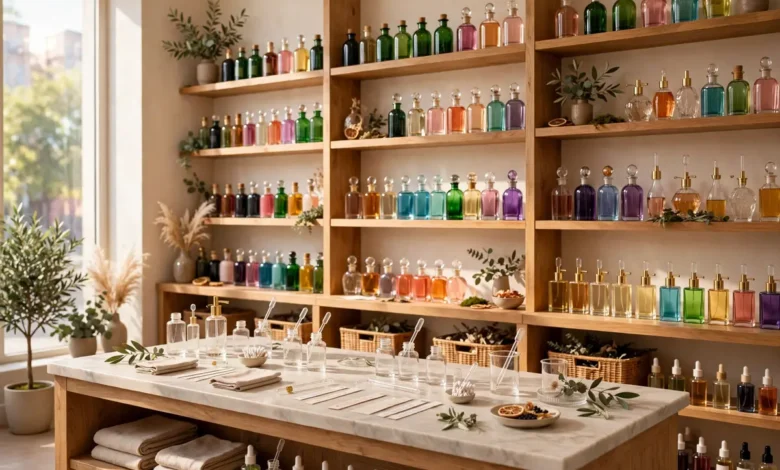
A good fragrance store should offer a broad and well-organised selection that covers the main fragrance families, from fresh citrus and light florals through to warm woods, sweet gourmands and deep orientals, because choice is what lets you discover what you actually like. The shelves should be clean and clearly labelled, tester bottles should be available for the majority of the range, and staff should be able to explain the difference between an eau de toilette and an eau de parfum without reaching for a script. When a shop invests in knowledgeable people and a properly maintained test area, it shows that it cares about helping customers find the right scent rather than simply moving stock.
The atmosphere of the shop matters almost as much as the range, since buying perfume is a sensory experience and a rushed or cluttered environment makes it harder to judge a scent fairly. Look for a store with good ventilation, a calm testing area away from strong air fresheners, and staff who invite you to take your time instead of spraying five fragrances on you at once. A trustworthy shop will also be transparent about prices, returns and authenticity, displaying clear price labels and offering receipts and proper packaging with every purchase. If a store feels secretive about where its stock comes from, or pushes you hard towards one particular bottle, that is a good reason to walk away.
How to Find the Best Fragrance Store Near Me
The fastest way to find the best fragrance store near me is to combine a map search with a quick check of reviews, because a shop that looks close on the map may have limited stock, while a slightly further boutique may be worth the extra journey. Start by searching for perfume shops, department stores and beauty retailers in your area, then read the most recent reviews to see whether customers praise the range, the staff and the testing experience. Pay attention to comments about whether testers are available, whether staff are helpful rather than pushy, and whether the shop stocks the brands you care about, since those details matter far more than a glossy shopfront.
Local knowledge can also point you towards shops that search results miss, so it is worth asking friends, colleagues or local social media groups where they buy their perfume. Independent perfumeries and small artisan shops often rely on word of mouth rather than advertising, and they can be the most rewarding places to visit because the owners usually choose every bottle on the shelf themselves. Once you have a shortlist of two or three shops, visit them without planning to buy anything on the first trip, compare the experience in each one, and note which store made you feel most comfortable. That relaxed first visit is often the best way to find a shop you will happily return to for years.
What to Expect on Your First Visit to a Perfume Shop
On your first visit to a perfume shop, expect to be greeted by a wall of bottles that can feel overwhelming, so it helps to arrive with a rough idea of what you like, whether that is fresh and clean, warm and spicy, or soft and floral. A good member of staff will ask a few gentle questions about the scents you already enjoy, how you plan to wear the fragrance, and whether you want something for daytime, evenings or special occasions, then suggest a small number of options to try. You should never feel rushed into a decision, and a reputable shop will be perfectly happy for you to leave with a few sprayed blotter strips and come back another day.
Most perfume shops also offer small samples or travel sizes, which are an excellent way to live with a fragrance for a few days before committing to a full bottle. Ask whether the shop provides samples of the scents you try, and whether it runs any gift sets or seasonal promotions that include miniature bottles, because these can be a cost-effective way to explore a brand. Remember that perfume changes as it dries down on your skin, so the scent you smell in the first minute is not the scent you will be wearing four hours later. A patient approach on your first visit will always lead to a better purchase than a hurried one.
How to Test Perfume Properly Before You Buy
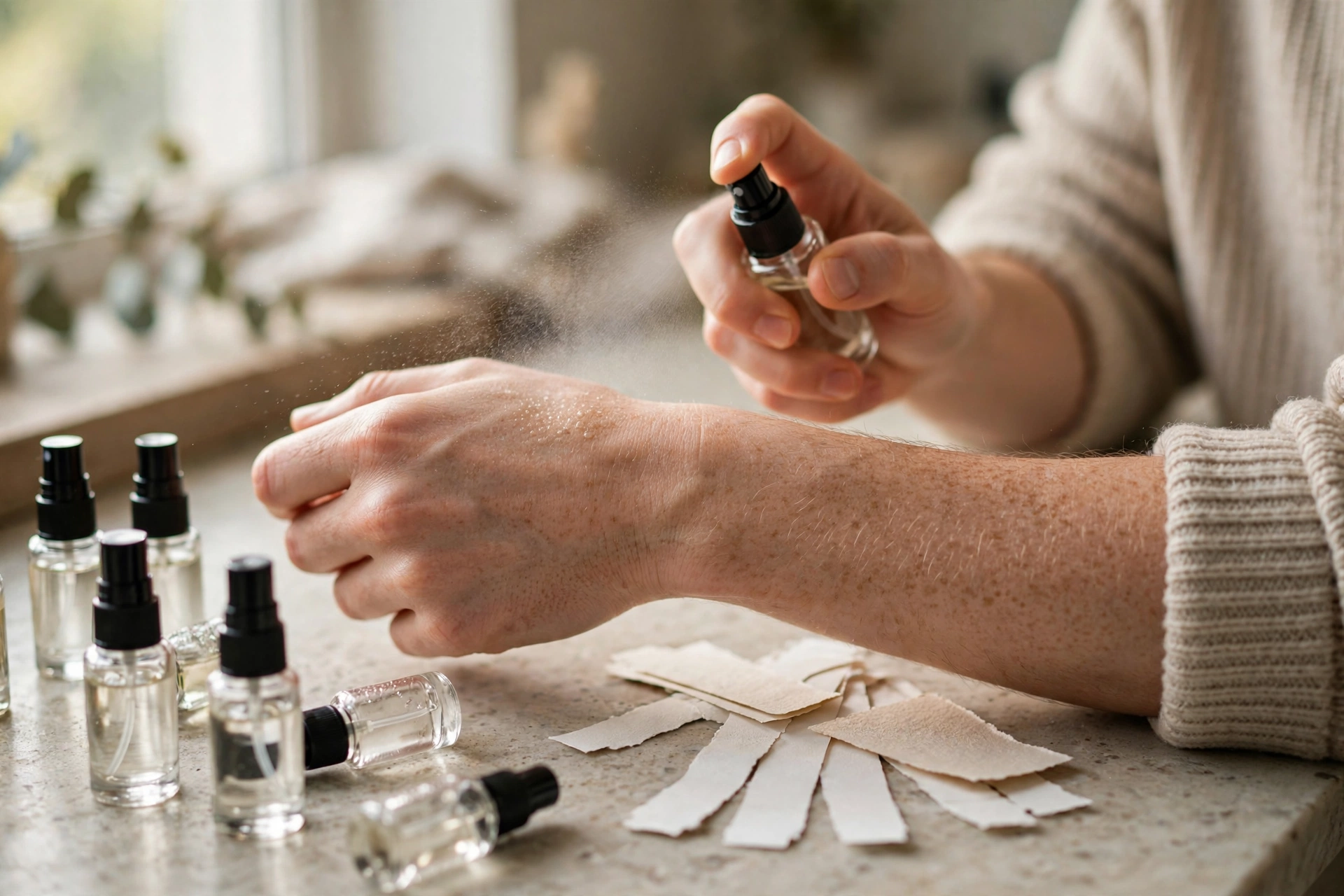
Testing perfume properly starts with using blotter strips for your first round of elimination, because your nose can only judge a small number of scents before it becomes confused and everything starts to smell the same. Spray each candidate onto a separate labelled strip, wave it gently rather than holding it right against your nose, and set aside the ones that appeal to you most. Smelling coffee beans between tests is a common tip in perfume shops, although stepping into fresh air for a minute works just as well, and either method gives your sense of smell a short reset before the next round.
Once you have narrowed the choice to two or three favourites, test them on your skin, because perfume reacts with your body chemistry and can smell noticeably different on you than it does on paper. Spray one scent on each wrist, wait at least fifteen minutes, and notice how the fragrance develops from its bright opening notes into its deeper heart and base notes over the next few hours. Avoid rubbing your wrists together, since that crushes the top notes and distorts the scent, and try not to test more than three fragrances on your skin in a single visit. If you are still unsure, ask for a sample and wear it for a full day at home before you decide.
Understanding Fragrance Families and Concentrations
Fragrance families are the simplest way to understand what you are smelling, and most perfumes fall into groups such as citrus, floral, woody, oriental and fresh, with many modern scents blending two or more families together. Citrus fragrances feel bright and energising, florals feel soft and romantic, woody scents feel warm and grounded, and oriental or amber fragrances feel rich and long-lasting, so knowing which family you gravitate towards makes every future shopping trip faster. When you find a perfume you love, ask the staff which family it belongs to, and they can point you towards similar scents from other brands that share the same character.
Concentration describes how much perfume oil is in the bottle, and it affects both the strength and the longevity of the scent on your skin. Eau de toilette is lighter and usually lasts a few hours, making it a popular choice for daytime and warmer weather, while eau de parfum is richer and can last considerably longer, which often makes it better value even when the bottle costs more. Parfum, sometimes called extrait, is the most concentrated form of all and is usually sold in smaller bottles because only a tiny amount is needed. Understanding these differences stops you from comparing prices unfairly, since a small bottle of eau de parfum may outlast a much larger bottle of a lighter spray.
Department Stores, Independent Perfumeries and Online Shops Compared
Department stores are the most convenient option for many shoppers, because they stock a wide range of designer brands under one roof, run regular promotions and gift sets, and usually have trained beauty consultants on the floor. The trade-off is that the range tends to focus on bestselling mainstream brands, so you may not find niche or artisan perfumes there, and the atmosphere can feel busy at weekends. If you want a familiar designer scent and you value convenience, a department store is a sensible first stop, especially when you can combine the visit with other shopping.
Independent perfumeries offer a very different experience, with carefully chosen ranges that often include niche houses, small-batch brands and unusual scents you will not see on the high street. The staff in these shops tend to be genuine enthusiasts who enjoy talking about ingredients, perfumers and the stories behind each bottle, and they will often let you spend far longer testing than a larger store would. Online shops, meanwhile, offer the widest choice and often the lowest prices, but you cannot smell before you buy, so they work best for repurchasing a scent you already know or for buying small discovery sets. Many experienced perfume lovers use all three, discovering scents in store and then comparing prices before they buy.
How to Spot a Fair Price and Avoid Counterfeit Perfume
A fair price for perfume depends on the brand, the concentration and the size of the bottle, so it is worth comparing the same bottle across two or three reputable retailers before you buy. Be cautious of any seller offering a well-known designer fragrance at a small fraction of its usual price, because genuine perfume is rarely discounted that deeply, and a price that looks too good to be true usually is. Authorised retailers, department stores and the brand’s own shops are the safest places to buy, and they will always provide proper packaging, a batch code on the box and bottle, and a receipt that supports a return if something is wrong.
Counterfeit perfume is a genuine problem, and the warning signs include blurry or misspelt packaging, a loose or poorly fitted cap, a weak or oddly chemical smell that fades within minutes, and a bottle that feels unusually light or cheap. Check that the cellophane wrapping is neat, that the box and bottle carry matching batch codes, and that the juice itself is clear rather than cloudy, since these details are hard for counterfeiters to copy perfectly. If you ever have doubts about a bottle you have bought, compare it with a tester in a reputable shop or contact the brand directly. Buying from a trusted local store removes almost all of this risk and gives you someone to return to if there is a problem.
Conclusion
Finding the right fragrance store near me is about far more than location, because the best shop is the one that gives you time, honest advice and the freedom to test properly before you spend your money. Start with a shortlist of local options, visit without pressure to buy, use blotter strips to narrow the field, and always test your favourites on your skin before committing to a full bottle. When you understand fragrance families and concentrations, and you know how to spot a fair price and a genuine bottle, every future perfume purchase becomes easier and far more enjoyable.
Your signature scent is out there, and the journey to finding it can be one of the most enjoyable kinds of shopping there is, so treat each visit as a chance to learn what you love rather than a chore to rush through. Keep notes on the scents you try, ask for samples whenever they are offered, and build a relationship with a local shop whose staff know your taste and can alert you when something new arrives. With a little patience and the guidance in this article, your next visit to a perfume shop should end with a bottle you will reach for again and again.
How Do I Find a Fragrance Store Near Me That Lets Me Test Before Buying?
You can find a fragrance store near me that lets you test before buying by searching for perfume shops and department stores in your area, then checking their reviews and websites for mentions of tester bottles, sampling services and in-store consultations. Most department stores, beauty chains and independent perfumeries keep testers for the majority of their range, and many will happily spray a blotter strip or a sample vial for you to take home. Calling ahead is the simplest way to confirm, and it also lets you ask whether the specific brand or scent you want is in stock before you travel.
It is also worth looking beyond the obvious high-street names, because independent perfumeries and niche boutiques often provide the best testing experience of all, with staff who encourage you to spend time with each scent. These smaller shops may not appear at the top of every search result, so local recommendations and community groups can be a valuable source of suggestions. Whichever shop you choose, a store that welcomes testers and offers samples is showing confidence in its products, and that confidence is a good sign that you are shopping in the right place.
Should I Buy Perfume in a Store or Online?
Buying perfume in a store is the better choice when you are trying a scent for the first time, because you can test it on your skin, compare it with similar fragrances, and get advice from staff who know the range. The in-store experience removes the risk of spending money on a bottle you end up disliking, and many shops will offer samples, gift wrapping and loyalty rewards that add value beyond the price of the bottle itself. For a first purchase, or for a gift where you want to be certain, the shop counter is hard to beat.
Buying online makes more sense when you are repurchasing a fragrance you already know and love, because you can compare prices across several reputable retailers and often find a better deal than on the high street. The risk comes when you buy a scent you have never smelled, since descriptions and reviews can only tell you so much about how a perfume will behave on your skin. A sensible approach is to discover scents in store, then buy refills or back-up bottles online from authorised sellers, so you enjoy both the confidence of testing and the convenience of home delivery.
How Long Should a Perfume Last on Skin?
How long a perfume lasts on skin depends on its concentration, its ingredients and your own skin type, but as a general guide an eau de toilette will usually be noticeable for around three to five hours, while an eau de parfum can last six hours or more. Heavier base notes such as woods, amber, musk and vanilla tend to linger far longer than bright citrus or green top notes, which is why a fresh summer scent often fades faster than a warm winter one. Skin that is well moisturised also holds fragrance better than very dry skin, so applying an unscented moisturiser before your perfume can help it last longer.
If your perfume seems to disappear quickly, it may be that you have simply become used to the scent rather than that it has actually faded, since our noses adapt to smells we wear often. Asking a friend whether they can still smell it is a more reliable test than relying on your own nose alone. You can also try spraying on clothes as well as skin, since fabric holds scent for much longer, although you should test delicate fabrics first. If a fragrance consistently fades within an hour on you, it may be worth trying a stronger concentration of the same scent family.
What Is the Difference Between Eau de Toilette and Eau de Parfum?
The difference between eau de toilette and eau de parfum is the concentration of perfume oil in the bottle, with eau de parfum containing a higher proportion of fragrance oils and therefore smelling richer and lasting longer on the skin. Eau de toilette is lighter and more refreshing, which makes it popular for daytime wear, office use and warm weather, while eau de parfum feels deeper and more intense, making it a common choice for evenings and colder months. The same fragrance is often sold in both concentrations, and the two versions can smell noticeably different, so it is worth testing both before you choose.
Price is another difference, because eau de parfum usually costs more per millilitre than eau de toilette, but it also lasts longer, so fewer sprays are needed and the bottle may last just as long. Neither concentration is better in an absolute sense, and the right choice depends on when and where you plan to wear the scent. Many people keep both versions of a favourite fragrance, using the lighter one during the day and the richer one at night, which is a flexible way to enjoy a scent you love in every setting.
Can I Return Perfume If I Do Not Like It?
Whether you can return perfume if you do not like it depends on the shop and on whether the bottle has been opened, so it is always worth checking the returns policy before you buy. Most reputable retailers will accept an unopened bottle for a refund or exchange within a set period, usually with a receipt, but many will not accept a return once the seal has been broken and the perfume has been sprayed, for hygiene reasons. This is why testing in store and asking for a sample first is so important, because it removes the risk of being stuck with a scent you do not enjoy.
Some shops offer a more generous policy, such as an exchange if you change your mind within a few days, while online retailers in many countries must accept returns of unopened goods bought at a distance. If you are buying perfume as a gift, ask the shop about gift receipts and exchange options, since these give the recipient a way to swap the scent without embarrassment. Keeping the box, the receipt and the original packaging until you are sure about the fragrance is the simplest way to protect your right to return it.
Source: The Fragrance Foundation