Plants That Disperse Their Seeds by Wind: Examples and Adaptations Explained

Plants That Disperse Their Seeds by Wind are among the most fascinating examples of natural adaptation in the plant kingdom. These species rely on air currents to transport their seeds away from the parent plant, ensuring wider distribution and reducing competition for essential resources such as sunlight, water, and nutrients. This process plays a crucial role in maintaining healthy ecosystems and promoting biodiversity across different habitats.


Seed dispersal is a vital stage in the plant life cycle, allowing new generations to grow in fresh environments. Without dispersal, seeds would remain clustered near the parent plant, leading to overcrowding and limited survival chances. Plants That Disperse Their Seeds by Wind have evolved unique structures that allow them to take advantage of natural air movement, making wind one of the most efficient dispersal agents in nature.
What are plants that disperse their seeds by wind
Plants That Disperse Their Seeds by Wind are species that use air currents as their primary method of spreading seeds. These plants have developed lightweight seeds or specialised fruit structures that can be easily lifted and carried by the wind. This natural strategy helps them colonise new areas, sometimes even far from the original parent plant, increasing their chances of survival and reproduction.
In scientific terms, this process is known as anemochory. Plants That Disperse Their Seeds by Wind are commonly found in open fields, grasslands, forests, and disturbed habitats where wind flow is strong and consistent. Their seeds are typically small, dry, and adapted with wings, hairs, or feathery structures that improve their ability to travel through the air over long distances.
Adaptations that help seeds travel by wind
One of the most remarkable features of Plants That Disperse Their Seeds by Wind is the development of parachute-like structures. For example, dandelion seeds are equipped with fine, hair-like structures known as a pappus. These act like tiny parachutes, allowing the seeds to float gracefully through the air and travel far from the parent plant before settling on the ground.
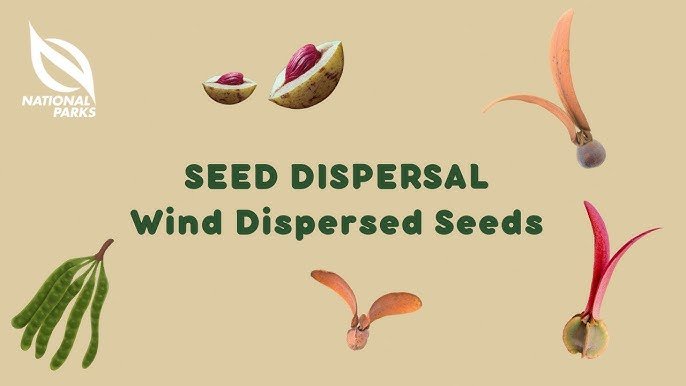
Another important adaptation includes winged seeds, often referred to as samaras. Trees such as maple and ash produce these specialised seeds that spin like helicopters as they fall. This spinning motion slows their descent, allowing wind currents to carry them further away. Plants That Disperse Their Seeds by Wind using this method benefit from increased dispersal range and reduced competition.
Some species produce extremely small and dust-like seeds, such as orchids. These seeds are so light that they can be carried by even the weakest air currents. Plants That Disperse Their Seeds by Wind with this adaptation often release thousands or even millions of seeds at once, increasing the likelihood that at least a few will land in suitable conditions for germination.
In addition, certain plants use a tumbleweed mechanism, where the entire dried plant detaches and rolls across the ground. As it moves, it releases seeds over a wide area. This method is especially effective in dry, open landscapes. Plants That Disperse Their Seeds by Wind using this strategy demonstrate how even entire plant structures can contribute to dispersal.
List of plants that disperse their seeds by wind
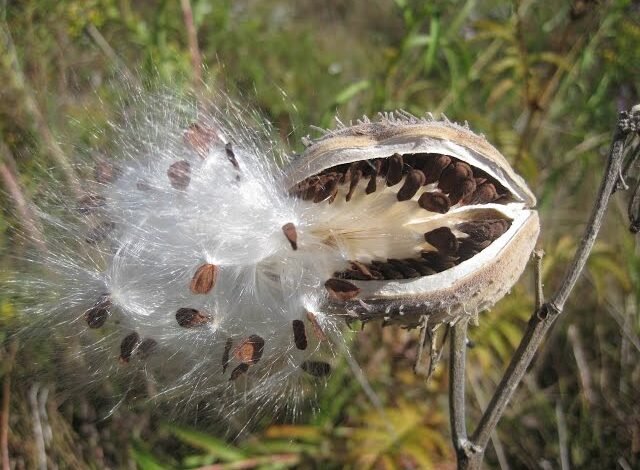
Plants That Disperse Their Seeds by Wind include many well-known species found across different environments. Dandelion is one of the most iconic examples, with its fluffy seed heads that easily float away in the breeze. Milkweed also uses silky fibres attached to seeds, allowing them to drift through the air like miniature parachutes.
Other important examples include cottonwood, poplar, thistle, and fireweed. These Plants That Disperse Their Seeds by Wind are commonly found in temperate regions and are well adapted to open environments where wind plays a strong role in shaping plant distribution. Their seeds are lightweight and designed for maximum aerial travel.
Trees such as maple, ash, pine, willow, and birch are also key examples. These Plants That Disperse Their Seeds by Wind produce winged seeds that glide or spin as they fall. This adaptation increases the distance seeds can travel and improves the chances of finding suitable soil for growth and development.
Additional examples include orchids, cattails, and elm trees. Plants That Disperse Their Seeds by Wind in this category often rely on microscopic or highly lightweight seeds that can be carried long distances by air currents, sometimes even across geographical barriers such as rivers or open fields.
Plants that disperse their seeds by wind list overview
A quick reference list of Plants That Disperse Their Seeds by Wind includes dandelion with parachute-like seeds, maple with spinning samaras, ash with elongated winged seeds, and cottonwood with fluffy airborne seeds. These examples clearly demonstrate how different structural adaptations enhance wind dispersal efficiency.
Other notable Plants That Disperse Their Seeds by Wind include pine, which produces winged seeds; milkweed, known for silky seed fibres; birch, which releases tiny lightweight seeds; and orchids, which produce dust-like seeds. Each of these species has evolved unique strategies to ensure successful reproduction through wind dispersal.
How wind dispersal works in nature
Plants That Disperse Their Seeds by Wind depend heavily on environmental conditions such as wind speed, direction, and seasonal changes. Strong winds can carry seeds over long distances, while plant height also plays an important role by exposing seeds to stronger air currents higher above the ground.
Seasonal timing is another important factor. Many Plants That Disperse Their Seeds by Wind release their seeds during dry or windy seasons to maximise dispersal distance. This timing ensures that seeds are carried away from the parent plant and have a higher chance of landing in suitable environments for germination.
Importance of wind seed dispersal in ecosystems
Plants That Disperse Their Seeds by Wind are essential for maintaining ecological balance. By spreading seeds across wide areas, they help prevent overcrowding and reduce competition for resources. This natural process supports biodiversity by allowing plant species to colonise new and diverse habitats.
Wind dispersal also plays a major role in forest regeneration and ecosystem recovery. Plants That Disperse Their Seeds by Wind help restore vegetation in disturbed areas, ensuring that ecosystems remain stable and resilient over time. This contributes to long-term environmental health and sustainability.
Advantages and disadvantages of wind dispersal
One major advantage of Plants That Disperse Their Seeds by Wind is the ability to travel long distances without relying on animals or water. This increases their chances of colonising new areas and enhances genetic diversity within plant populations, supporting long-term survival and adaptation.
However, Plants That Disperse Their Seeds by Wind also face limitations. Many seeds land in unsuitable environments, reducing germination success. Wind direction is unpredictable, and a large number of seeds may be wasted before reaching fertile ground. Despite this, the strategy remains highly effective in many ecosystems.
Conclusion
Plants That Disperse Their Seeds by Wind demonstrate extraordinary evolutionary adaptations that allow them to thrive in diverse environments. From parachute-like structures to spinning winged seeds, these plants use wind as a natural transport system to ensure survival and reproduction across vast distances.
Understanding Plants That Disperse Their Seeds by Wind highlights the importance of natural dispersal mechanisms in shaping ecosystems. These plants not only support biodiversity but also contribute to ecological stability, showing how powerful and efficient nature’s design can be.